
1953 CIA Coup of Iran
.
SituationPolitics.Com
1/12/20264 min read
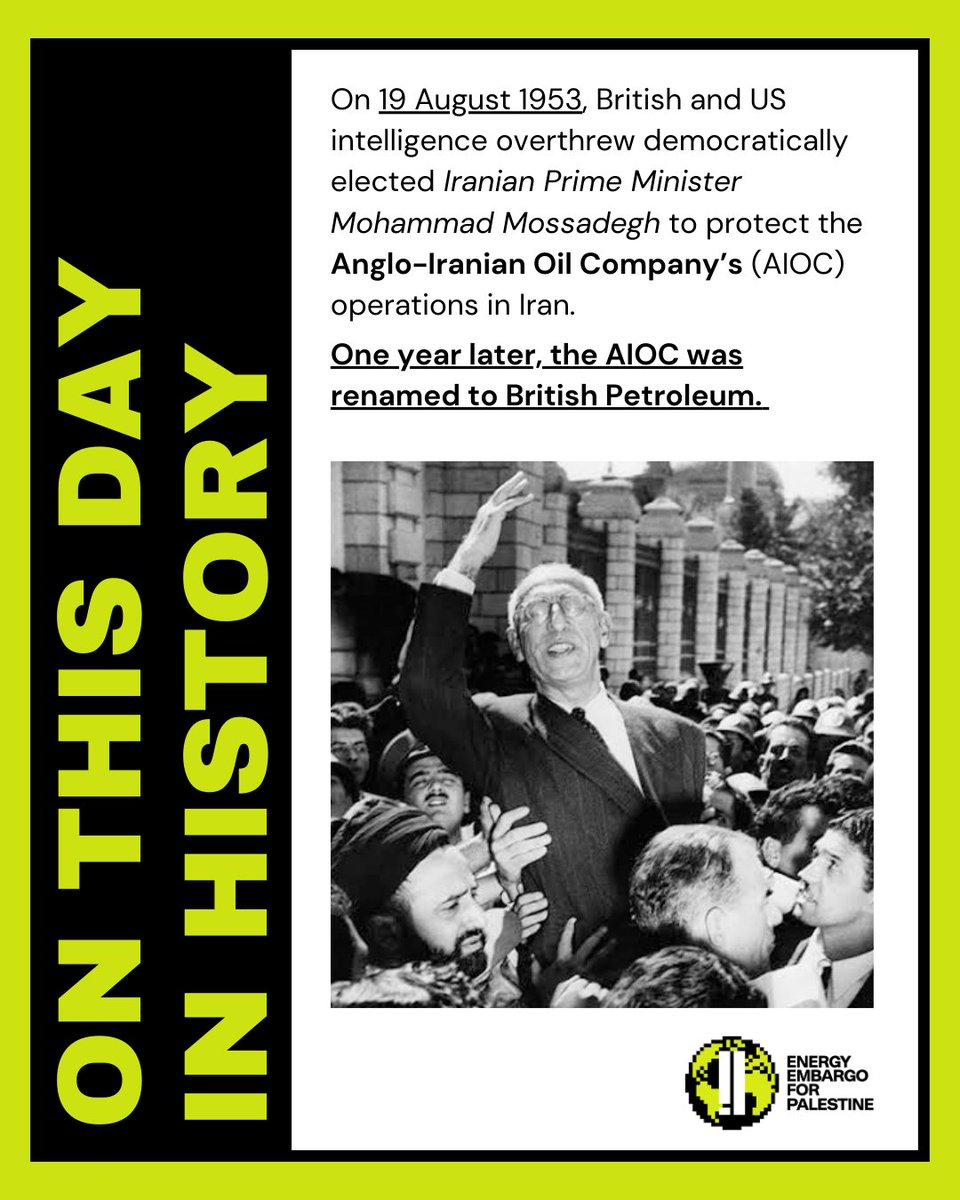
'In 1953, the CIA and British intelligence orchestrated a coup d’etat that toppled the democratically elected government of Iran. The government of Mohammad Mossadegh. The aftershocks of the coup are still being felt.
In 1951 Prime Minister Mossadegh roused Britain’s ire when he nationalized the oil industry. Mossadegh argued that Iran should begin profiting from its vast oil reserves which had been exclusively controlled by the Anglo-Iranian Oil Company. The company later became known as British Petroleum (BP).
After considering military action, Britain opted for a coup d’état. President Harry Truman rejected the idea, but when Dwight Eisenhower took over the White House, he ordered the CIA to embark on one of its first covert operations against a foreign government ..................
The crushing of Iran’s first democratic government ushered in more than two decades of dictatorship under the Shah, Mohammad Reza Pahlavi, who relied heavily on US aid and arms. The anti-American backlash that toppled the Shah in 1979 shook the whole region and helped spread Islamic militancy.' This is a photo of Reza Pahlavi, the eldest son of Mohammad Reza Pahlavi, whom the US, the UK and Israel are hoping to install as the new leader of Iran.
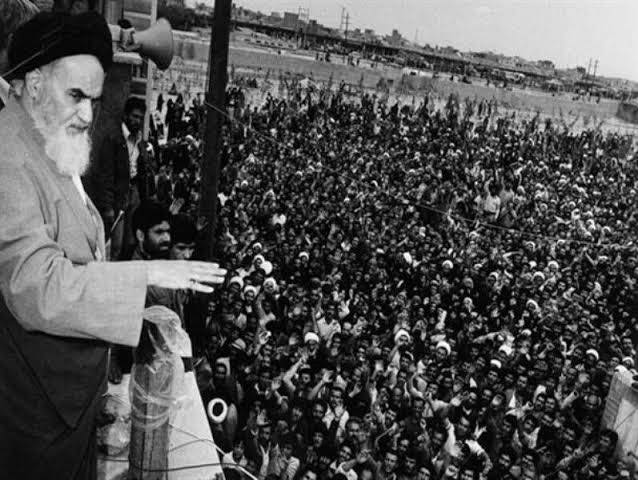
Below is a chronology that makes it possible to clearly understand why the Iranian Revolution was a popular revolution, and not merely a coup or an event imposed from above.
The Iranian Revolution: a popular revolution carried by Imam Khomeini and the people
1) 1963 – The breaking point: Imam Khomeini enters the scene
• The Shah launches the “White Revolution”:
• reforms imposed from above,
• forced Westernization,
• marginalization of Islam and the clergy,
• full alignment with the United States and Israel.
• Imam Khomeini publicly denounces:
• the Shah’s dictatorship,
• submission to foreign powers,
• social injustice.
Result:
• The popular uprising of June 1963.
• Bloody repression.
• The Imam is arrested, then released under popular pressure.
From this moment on, the bond between the Imam and the people is sealed.
2) 1964–1965 – Exile: attempting to cut the Imam off from the people
• Imam Khomeini condemns a law granting judicial immunity to American military personnel in Iran.
• The Shah decides to remove him:
• exile to Turkey (1964),
• then to Iraq (Najaf) from 1965 onward.
The regime’s objective:
to isolate the Imam in order to crush dissent.
Failure:
• The Imam’s sermons and messages are:
• recorded on audio cassettes,
• copied,
• clandestinely distributed throughout Iran.
• Mosques, bazaars, and universities become centers of popular mobilization.
3) 1970–1977 – Opposition rooted in society
• From Najaf, the Imam:
• develops an Islamic political vision,
• insists on the role of the people,
• denounces tyranny and foreign dependence.
• Inside Iran:
• strikes,
• demonstrations,
• cultural and religious resistance.
The SAVAK represses, but fails to break the popular momentum.
4) 1978 – The decisive year: the people rise up
January 1978
• The regime publishes an article insulting the Imam.
• Massive demonstrations.
• Repression.
• Beginning of the 40-day protest cycle (a Shiʿi mourning tradition).
Spring–Summer 1978
• The movement expands to include:
• workers,
• students,
• bazaar merchants,
• religious figures,
• women,
• popular and middle classes.
• The slogans are clear and unified:
• “Independence”
• “Freedom”
• “Islamic Republic”
No armed party, no foreign army:
the street, the people, mass mobilization.
5) October 1978 – Exile in France: the voice becomes global
• Under pressure from the Shah, the Imam is expelled from Iraq.
• He settles in Neauphle-le-Château (France).
The opposite of what was intended occurs:
• complete freedom of speech,
• access to international media,
• daily messages to the Iranian people,
• open coordination of the movement.
The revolution becomes visible to the entire world.
6) January 1979 – The Shah flees Iran
• General strikes paralyze the country.
• The army is demoralized.
• On January 16, 1979:
• the Shah leaves Iran.
This is not a military overthrow:
• no coup,
• no civil war,
• but the collapse of a regime isolated from its people.
7) February 1, 1979 – The historic return of the Imam
• After 14 years of exile, Imam Khomeini returns to Iran.
• He arrives aboard an Air France plane.
• Millions of Iranians welcome him in the streets of Tehran.
This event is one of the largest popular receptions in modern history.
No army imposes it.
No coup d’État.
The people clear the path.
February 1979 – The victory of the revolution
• The Shah’s regime collapses definitively.
• The army declares neutrality.
• The institutions of the old regime fall.
The revolution is completed by the people, not by a military apparatus.
9) March–April 1979 – The popular choice: the referendum
• Imam Khomeini refuses to impose a system.
• He proposes a national referendum.
March 30–31, 1979:
• Question posed to the people:
“Islamic Republic: yes or no?”
• Result:
• more than 98% “yes.”
The people explicitly choose the new system.
10) 1979 – The Constitution: popular vote and legitimacy
• A Constituent Assembly is elected.
• A Constitution is drafted.
• It is submitted to a popular referendum (December 1979).
• The people approve it by vote.
The Islamic Republic is:
• born of a popular revolution,
• confirmed by two referendums,
• legitimized by the vote, not by force.
Conclusion
• Imam Khomeini did not seize power by force.
• He never commanded an army.
• He:
• embodied moral authority,
• unified popular anger,
• accompanied a massive movement.
Without the people, there would have been no revolution.
Without the Imam, the people would have lacked a unifying figure.
info@situationpolitics.com
© 2026. SituationPolitics.Com - All rights reserved