Israeli Mossad Involvement in Iranian Protests
The Jerusalem Post: When it comes to the spy agency and Iran, there is always far more than meets the eye.
SituationPolitics.Com
3/8/202614 min read
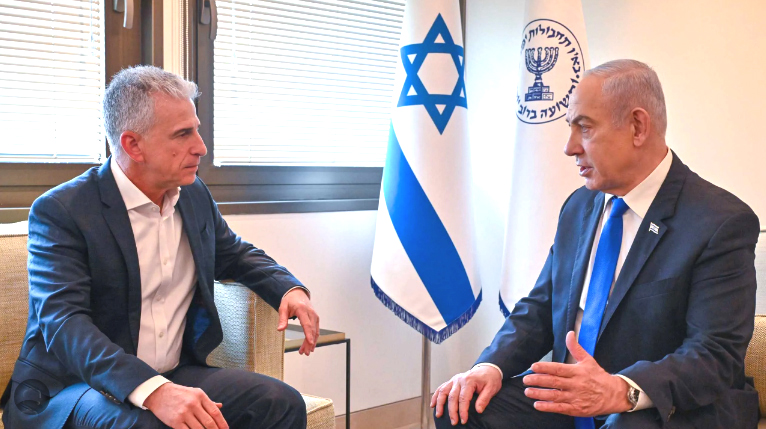
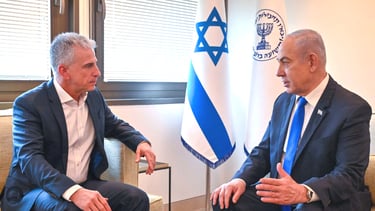
THE JERUSALEM POST: How deeply are Israel's Mossad spymasters involved in Iran protest crisis? - analysis https://www.jpost.com/middle-east/iran-news/article-883524
When it comes to the spy agency and Iran, there is always far more than meets the eye.
The IDF and Israel in the public sphere are doing all they can to stay out of the current Iran protests crisis to avoid being caught in Tehran’s crosshairs with ballistic-missile fire.
But what about the Mossad in the shadows?
First of all, the Mossad is less in the shadows in the Islamic Republic than it used to be.
Last June, the Mossad had hundreds of agents involved in Israel’s 12-day war that set back Iran’s nuclear-weapons program, ballistic-missiles program, air-defense systems, and killed dozens of its top military and intelligence officers.
Following the war, Mossad Director David Barnea released a rare and shocking statement, foreshadowing the spy agency’s activities in Tehran.
Israel “will [continue to] be there, like we have been there,” he told the Mossad and the general public.
On December 29, what is dubbed the Mossad X/Twitter account in Farsi encouraged Iranians to protest against the Iranian regime, telling them that it is literally physically with them at the demonstrations.
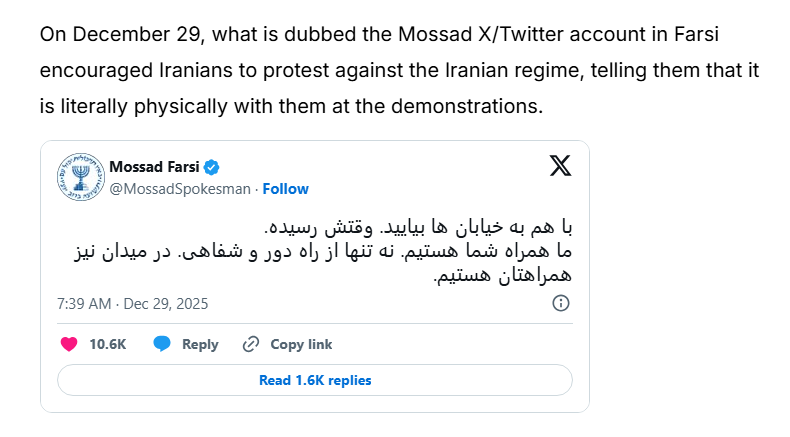
“Go out together into the streets. The time has come,” the Mossad wrote. “We are with you,” it added. “Not only from a distance and verbally. We are with you in the field.”
Although Mossad sources have denied any formal connection to the account, it is well known that the Mossad, the CIA, and other agencies often use fronts, which are not formally connected to them, to carry out covert operations or psychological warfare.
For example, after the July 2020 explosions and destruction of Iran’s nuclear facility at Natanz, an unknown and later revealed to be fictitious group took credit for the attack.
The whole world, including Iran, attributed this attack to the Mossad. Former Mossad director Yossi Cohen in not-so-veiled hints in his recent book The Sword of Freedom all but confirmed it, describing the sabotage in intricate detail.
Foreign actors had armed Iranians to help them fight against the regime’s forces being used to crack down on and oppress protesters, Channel 14’s Tamir Morag reported Tuesday. Iran’s foreign minister retweeted the report for his own agenda.
Mossad sources again distanced themselves from Morag’s report and any explicit acknowledgment of their involvement in the protests. But this is not a time period when Israel can publicly acknowledge its role without damaging the real primary narrative of Iranians trying to free themselves from an authoritarian regime.
January 19, 2026
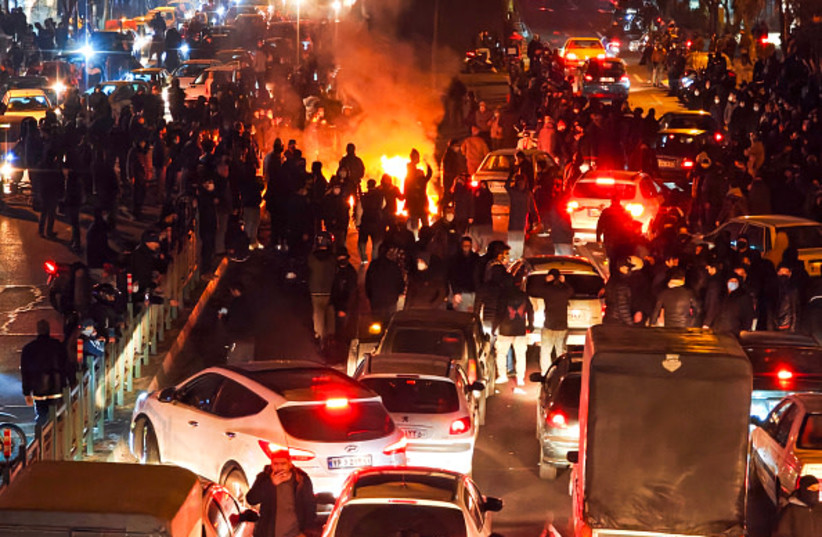
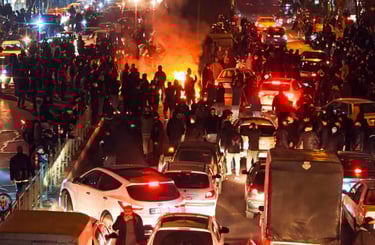
Tehran, Iran – Supreme Leader Ayatollah Ali Khamenei has acknowledged that “several thousands” of Iranians have been killed since protests started in late December among shopkeepers in downtown Tehran, before gradually spreading to big and small cities.
That confirmation is unusual because Khamenei has typically avoided commenting on death tolls during previous protests in Iran over the years.
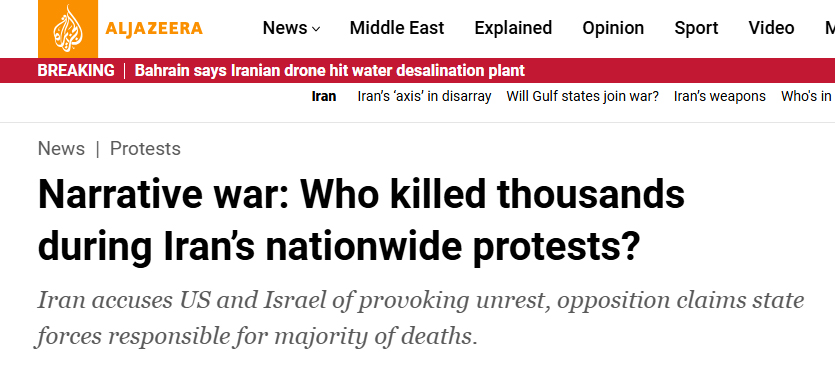
But there are stark contrasts in the narratives provided by the Iranian state, foreign-based opposition, and United States President Donald Trump over exactly what has happened during the unrest, and what could be coming next.
What do we know for certain?
The protests started over economic grievances in business and trade districts of the capital city on December 28, and morphed into nationwide expressions of anger and frustration at the political establishment over the days that followed.
The nights of January 8 and January 9 were by far the deadliest, according to state officials and media, as well as foreign-based outlets and eyewitness accounts on the ground.
Abbas Masjedi Arani, the head of Iran’s medical examiner authority, told state media that many of the casualties were shot in the chest or the head from close range or from rooftops with the aim of inflicting mortal wounds, while others were stabbed to death.
State outlets said most protesters were young Iranians, many in their 20s.
Iranian authorities have fully cut off access on the night of January 8, as well as mobile communications, so it was not even possible to call rescue services in cases of emergency.
The unprecedented internet blackout began to gradually scale back on Sunday after nearly two weeks, but most of the country’s 90-million-strong population remain in limbo amid uncertainty over what the future could hold.
Local calls, SMS text messages and outgoing international phone calls have been restored over recent days. A local intranet that offers some limited services is operational.
The protests on the streets have now largely died down, with thousands of heavily armed security forces setting up patrols and checkpoints across the country, especially at flashpoints like the Grand Bazaar in Tehran.
The distribution of videos of the protests outside of Iran has been rare amid the digital blackout, with only a minority of Iranians able to leave the country or connect to Starlink satellite internet that bypasses the government’s internet restrictions.
What does the state say?
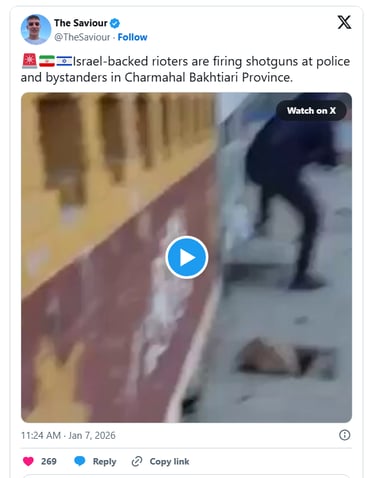
Iranian officials, from political to military and judicial leaders, have emphasised on a daily basis that the US and Israel have been behind the protests, accusing the foreign powers of arming and funding the opposition.
Khamenei, Iran’s 86-year-old supreme leader, said that Trump was a “criminal” for directly involving himself in the unrest numerous times.
According to Iranian government, armed and trained “terrorists”, not state forces, were directly responsible for the killings of thousands during the protests. They claim that people acting on behalf of the US and Israel shot and stabbed people to derail peaceful demonstrations.
Judiciary officials have stressed that those who took part in “riots” will face swift punishments without any mercy shown. The Supreme Court and the general prosecutor’s office announced on Sunday that they had formed a joint workgroup to expedite protest-related cases.
What are foreign-based monitors saying?
Foreign-based monitors and Iranians abroad who are opposed to the Iranian establishment maintain that state forces killed protesters in huge numbers.
The latest figures by the widely-cited Human Rights Activists News Agency (HRANA), which is based in the US, say more than 3,300 deaths have been confirmed, and over 4,300 others are being investigated.
The organisation also says 2,107 people have been severely wounded, and more than 24,000 arrested.
The Reuters news agency on Sunday cited an unnamed Iranian official in the region as saying at least 5,000 people have been killed, including about 500 security personnel. Most deaths were reportedly recorded in the Kurdish-majority areas of Iran in the northwest.
Al Jazeera is unable to independently verify these figures.
Foreign-based outlets have also reported that Iranian authorities demand so-called “bullet money” from the families of protesters killed by security forces in order to allow their burial, or demand that families sign documents saying they were members of the Basij paramilitary force of the Islamic Revolutionary Guard Corps (IRGC) and not protesters. Iranian officials have rejected both claims.
What are the US and Israel saying?
US and Israeli officials have been openly touting the potential for toppling the theocratic leadership in Tehran over recent months, including during the 12-day war in June.
At the height of the protests, Trump urged Iranians to remain in the streets, alleging “help is on the way”, before expressing “great respect” for the Iranian leadership based on a claim that planned executions for more than 800 political prisoners were halted.
The US president “speaks a lot of nonsense”, Tehran prosecutor Ali Salehi said on Saturday in reaction to the claim, adding that “our response will be deterring and quick”.
But Trump has not stopped his comments, and on Saturday called for the end of Khamenei’s 37-year rule and branded the Iranian leader a “sick man”.
Israeli Prime Minister Benjamin Netanyahu has refrained from directly commenting on the protests. Israeli public broadcaster Kan reported that Netanyahu ordered his officials to stop giving interviews on the subject after Heritage Minister Amichai Eliyahu said last week that Israeli operatives are active in Iran “right now” as they were during the 12-day war.
January 15, 2026
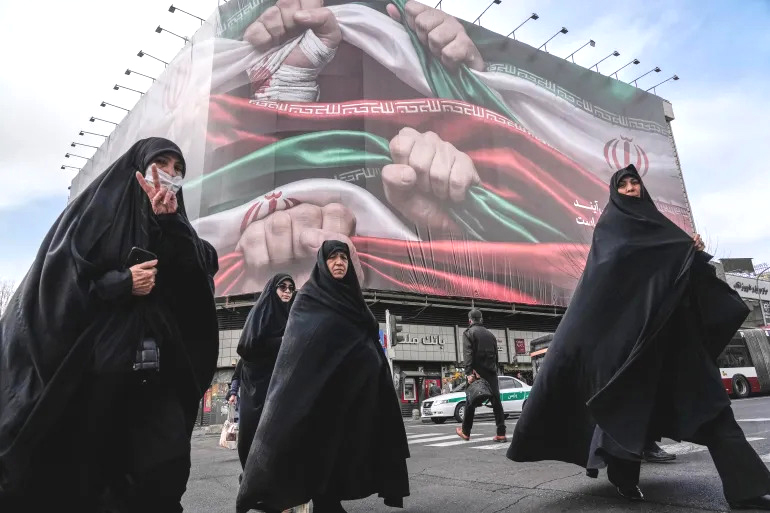
Women cross a street in Tehran under a banner showing hands firmly holding Iranian flags as a sign of patriotism on January 14, 2026
Transcendent moments in geopolitics that reverberate around the world are no longer just forged in the streets or inside situation rooms.
They are increasingly engineered in the digital sphere, where actors, often with a self-serving agenda, compete to control the narrative, define its meaning and decide who speaks for whom.
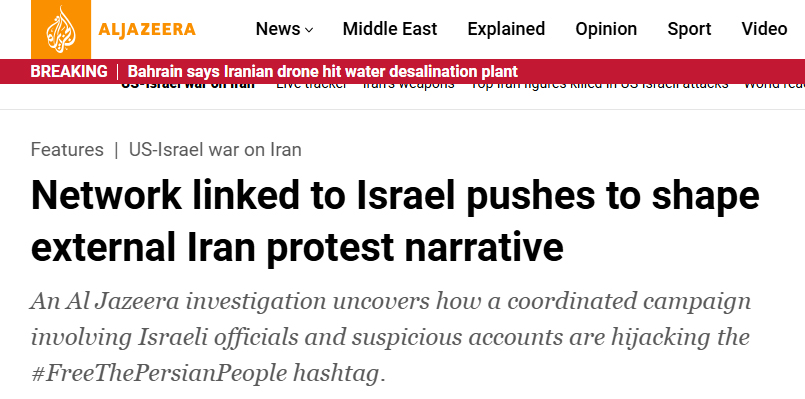
In recent weeks as protests erupted in Iranian cities, the hashtag #FreeThePersianPeople trended on X.
The campaign was accompanied by a flood of posts heralding an imminent “decisive moment” in Iran’s history and presenting themselves as the authentic voice of the Iranian people.
However, an extensive data analysis by Al Jazeera reveals a different picture.
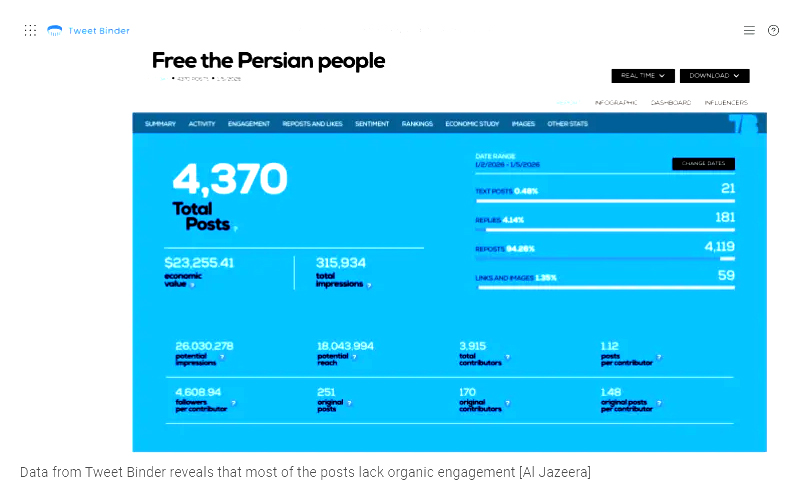
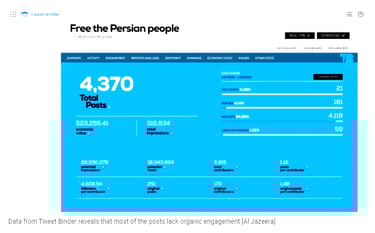
Data from Tweet Binder reveals that most of the posts lack organic engagement
Tracking the sources of this interaction and its dissemination paths uncovers that the digital campaign did not originate organically from within Iran.
Instead, it was spearheaded by external networks – primarily accounts linked to Israel or pro-Israel circles – that played a central role in manufacturing momentum and steering the discourse toward specific geopolitical goals.
‘Abnormal’ patterns of circulation
The data associated with the campaign reveals a striking anomaly in how the hashtag spread, indicative of artificial amplification.
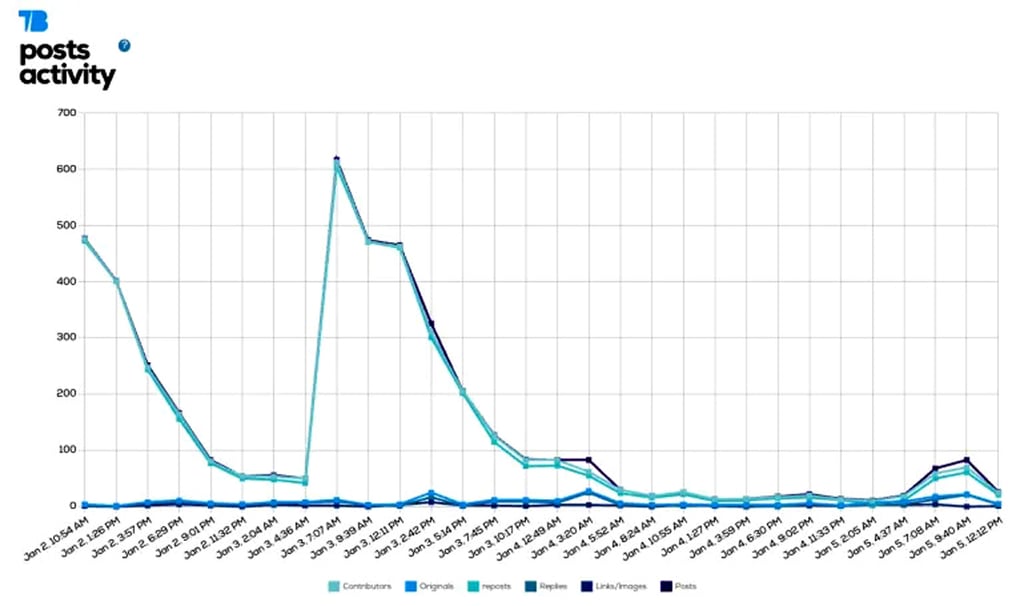
Al Jazeera’s analysis found that 94 percent of the 4,370 posts analysed were retweets compared with a negligible percentage of original content.
More significantly, the number of accounts producing original content did not exceed 170 users, yet the campaign reached more than 18 million users.
This massive gap between the limited number of sources and the vast reach is a hallmark of coordinated influence operations, often referred to as “astroturfing”, in which pre-packaged messages are amplified to create the illusion of widespread public consensus.
A single narrative, multiple formats
A review of the content shows the hashtag was not merely an expression of social or economic grievances.
Instead, it carried a rigid political framework designed to reframe and actually pour on the unrest.
The discourse portrayed developments inside Iran as a “moment of collapse” and relied on sharp binaries: “The People vs. The Regime”, “Freedom vs. Political Islam” and “Iran vs. The Islamic Republic”.
The campaign heavily promoted Reza Pahlavi, the son of Iran’s last shah, as the sole political alternative.
Pahlavi himself engaged with the campaign, a move that was immediately amplified by Israeli accounts describing him as the “face of the alternative Iran.”
But he is not thought of in those terms by a majority of Iranians, many of whom have memories of his father’s abuses and how the CIA restored him to power in 1953 in a United States-United Kingdom-orchestrated coup.
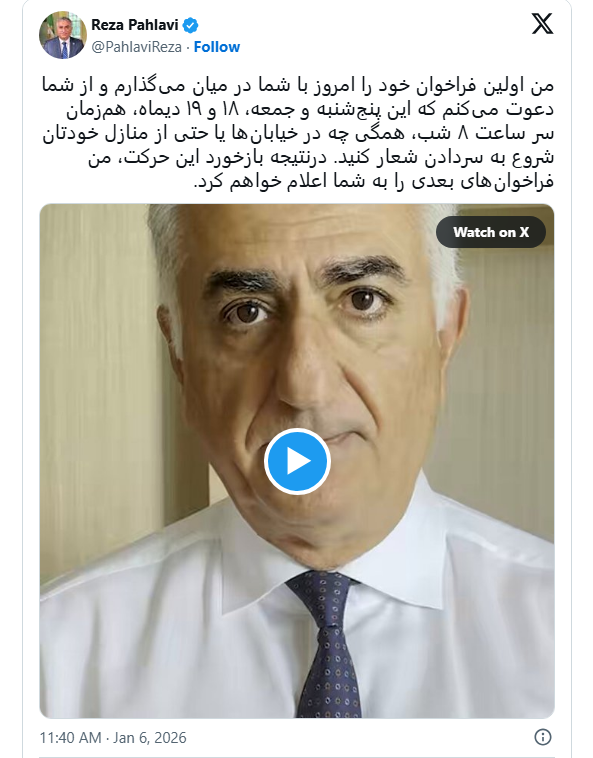
Translation: I am sharing my first call with you today and invite you to start chanting slogans this Thursday and Friday, 18th and 19th of Dey, simultaneously at 8 PM, all of you whether in the streets or even from your own homes. Based on the feedback from this action, I will announce the next calls to you.
Direct Israeli involvement
The campaign was not limited to anonymous activists. It also involved direct participation from current and former Israeli officials during the campaign’s peak.
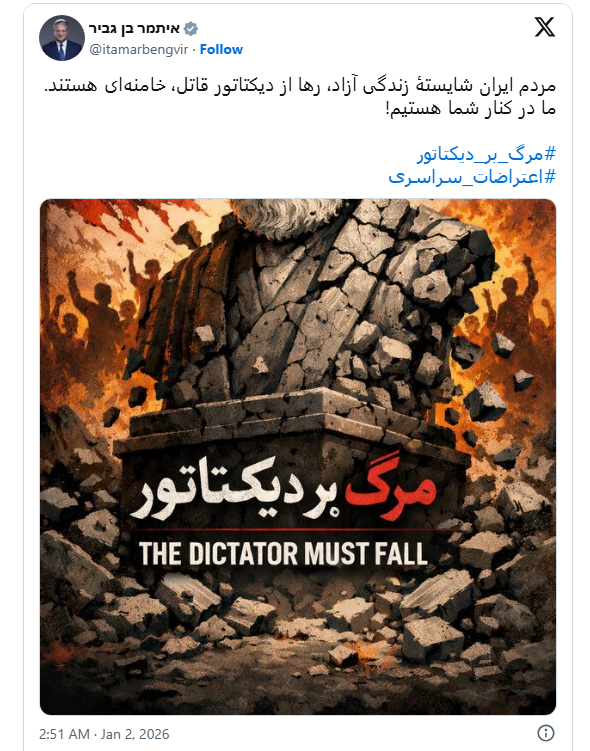
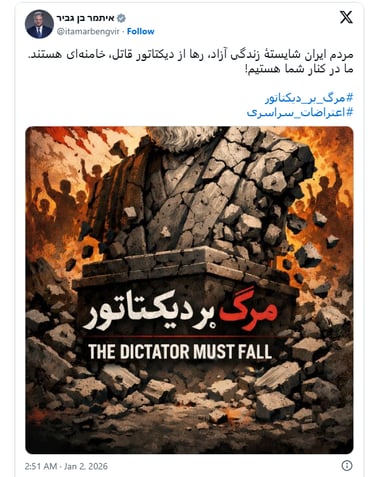
Israeli Minister of National Security Itamar Ben-Gvir posted a tweet in Persian addressed to the Iranian people, calling for the “fall of the dictator” and expressing support for the protests.
Translation: The people of Iran deserve a free life, liberated from the killer dictator, Khamenei. We stand with you!
Similarly, tweets by former Israeli Prime Minister Naftali Bennett were widely circulated within the hashtag’s network, repurposed to fit the “liberation” narrative.
Turning protests into an ideological war
One of the campaign’s most prominent features was its attempt to reframe the protests as a conflict against religion rather than against economic mismanagement and political repression.
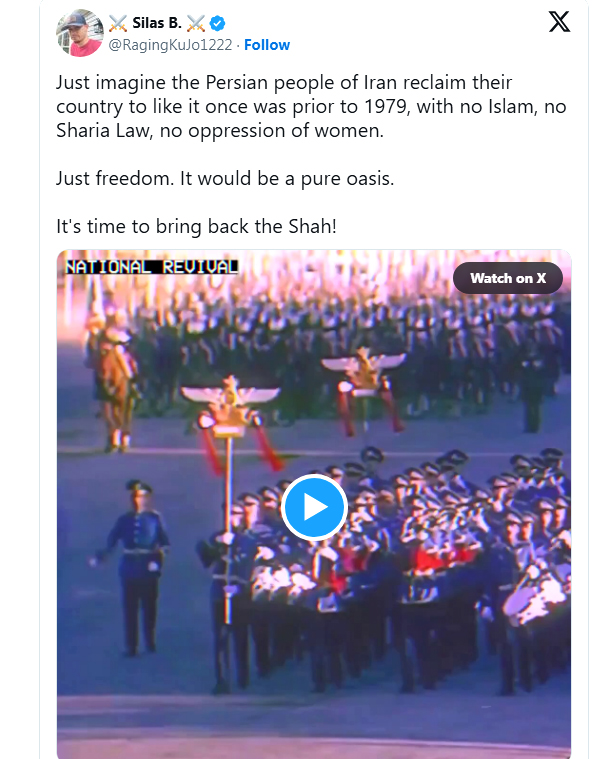
Posts describing the Iranian government as an “oppressive Islamist regime” circulated alongside narratives portraying the “Persian people” as victims of Islam.
This attempt to distinguish between “Persians” and “Muslims” appeared aimed at isolating the regime from Iranian society and framing the unrest as a civilizational clash.
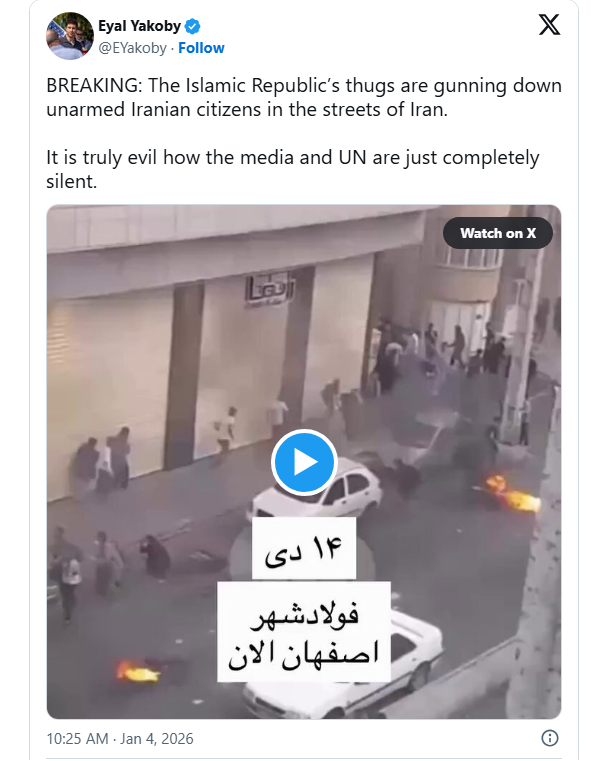
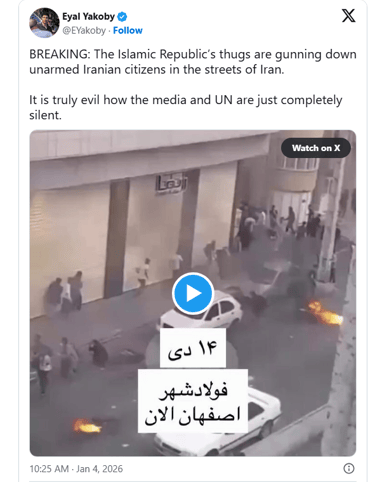
Israeli activists, including Eyal Yakoby and Hillel Neuer, also pushed content accusing the Iranian authorities of excessive violence while attacking what they termed the “silence of international media.”
Calls for foreign intervention
The discourse quickly evolved from solidarity to explicit calls for foreign military intervention.
And this narrative was pushed by US President Donald Trump, who bombed Iran’s nuclear sites as part of Israel’s 12-day war against Iran in June.
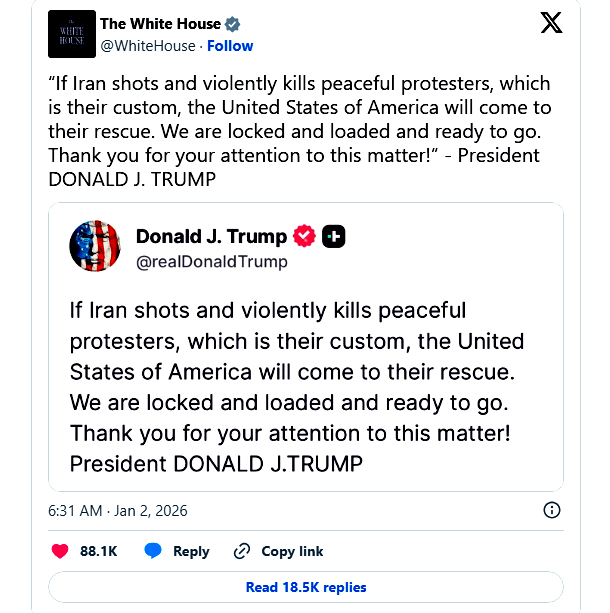
The network amplified statements attributed to Trump regarding Washington’s readiness to intervene.
Pahlavi publicly welcomed these statements, framing them as support for “change.”
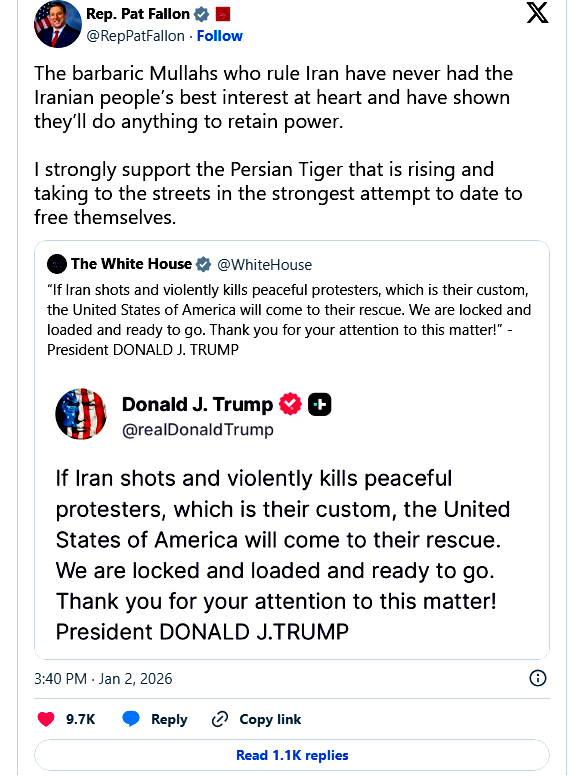
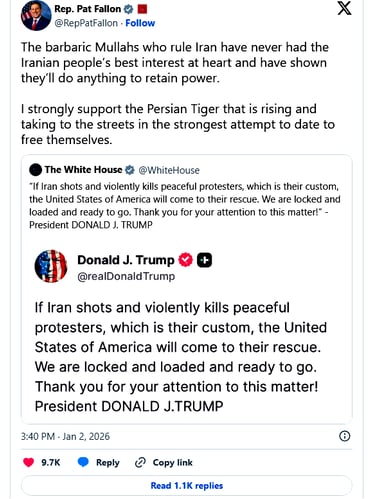
Simultaneously, members of the US Congress, including Representative Pat Fallon, a member of Trump’s Republican Party, further amplified these sentiments while dozens of accounts within the network directed tweets at Israeli Prime Minister Benjamin Netanyahu, urging direct Israeli intervention.
The ‘puppet masters’ behind the network
Al Jazeera’s network analysis identified specific “central nodes”, or accounts that played a pivotal role in amplifying the hashtag.
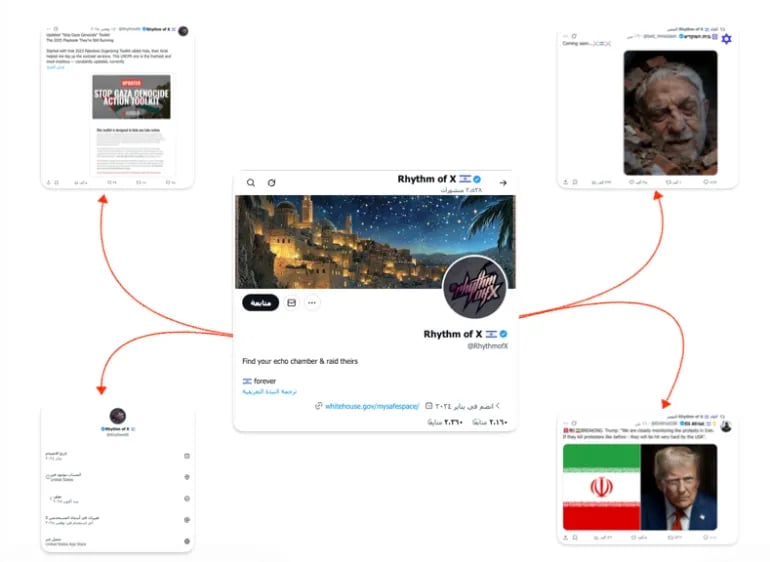
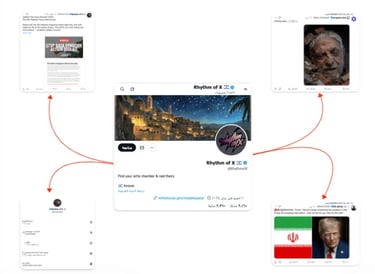
“Rhythm of X”: This account emerged as a central hub for interaction. Created in 2024, it has changed its handle five times. Its content focuses almost exclusively on supporting Israel, promoting the Iranian monarchy and calling for US action against Iran’s Islamic Revolutionary Guard Corps.
Posts Activity: Tweet Binder’s timeline reveals activity peaks coinciding with intensive posting intervals [Al Jazeera]
The #FreeThePersianPeople hashtag is driven by external accounts acting as nodes in the dissemination network [Al Jazeera]
“Nioh Berg”: This verified account created in 2017 (which has also changed its name five times) identifies its user as a “Jewish Iranian activist.”
It presents her as a key voice in the movement and says she is wanted by Iranian authorities.
“Israel War Room”: The analysis shows a strong overlap between the “Nioh Berg” network and the “Israel War Room” account, which regularly disseminates security and political content aligned with Israeli state narratives.
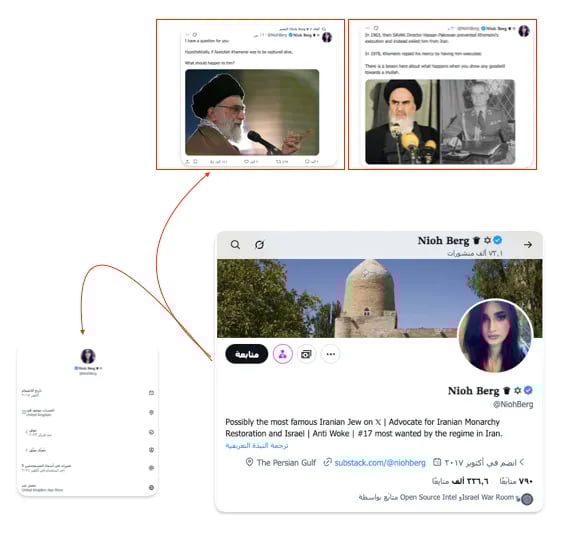
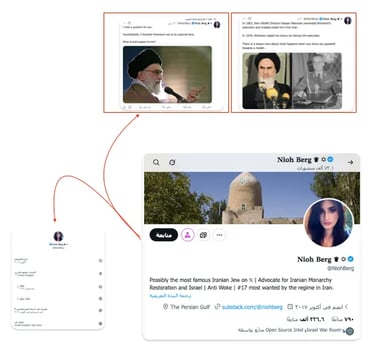
The network analysis exposes an Israeli fingerprint in trying to shape the narrative about the protests in Iran [Al Jazeera]
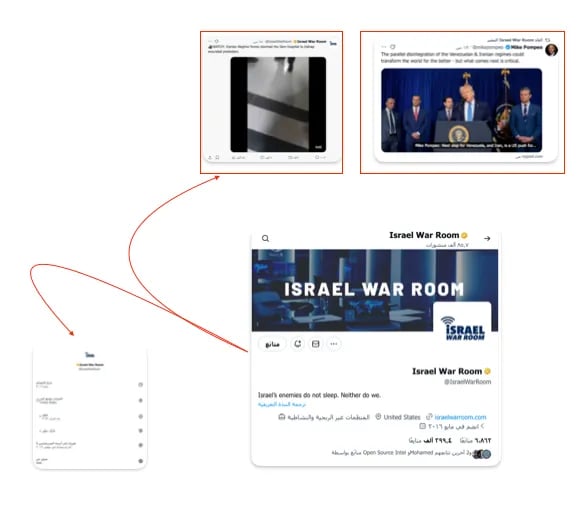
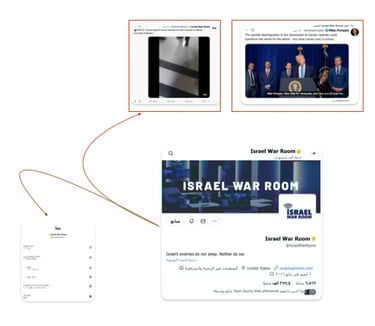
The network analysis reveals the digital campaign in support of the Iranian antigovernment protests did not originate organically from Iran [Al Jazeera]
CONCLUSION: Manufacturing a crisis
The investigation concludes that the #FreeThePersianPeople campaign was not a spontaneous digital expression of internal Iranian anger.
Instead, it appears to be a politicized information operation constructed outside Iran and led by networks linked to Israel and its allies.
The campaign successfully hijacked legitimate economic grievances, reframing them within a broader political project that links the “liberation of Iran” to the return of the monarchy and foreign military intervention.


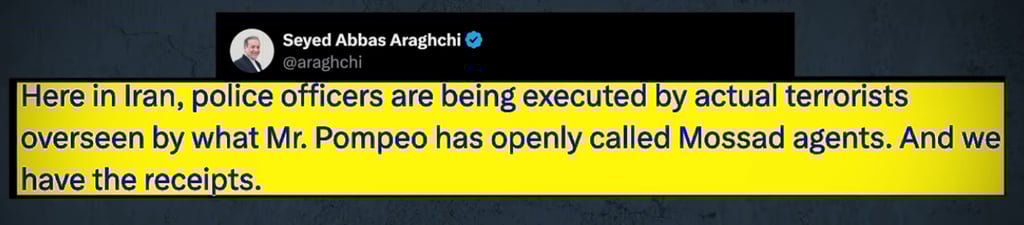
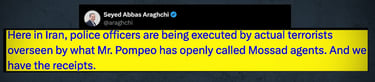
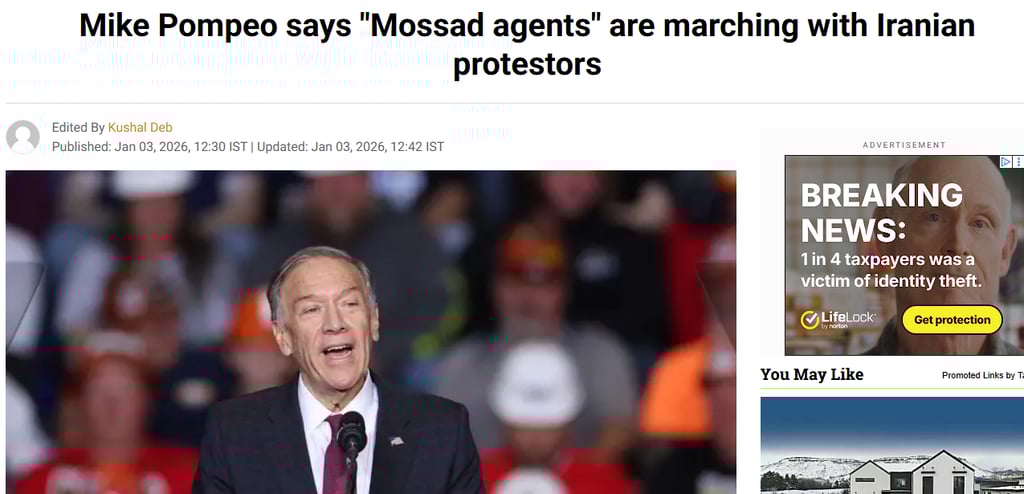
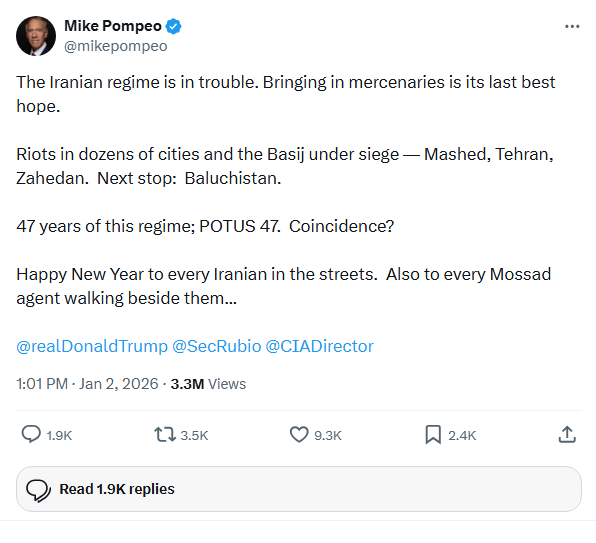
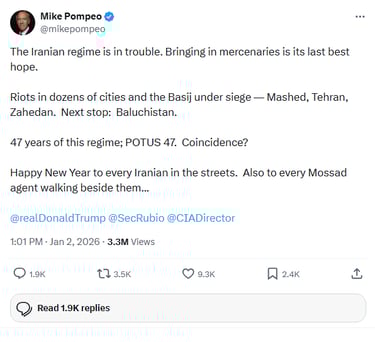
Former US Secretary of State and ex-CIA Director Michael Richard Pompeo, has ignited a firestorm with his social media post where he asserts that Mossad agents are marching beside the protestors as the nation is engulfed in protest against the Khomeini regime.
There had been speculation about the protest being amplified by the Israeli intelligence and, in some places, being organised to cash in on the economic turmoil within Iran to push for a pro-Western authority.
In a social media post, Pompeo said, “The Iranian regime is in trouble. Bringing in mercenaries is its last best hope...47 years of this regime; POTUS 47. Coincidence? Happy New Year to every Iranian in the streets. Also, to every Mossad agent walking beside them."
Pompeo had allegedly faced an assassination attempt from the Iranian regime in 2022.
Earlier on Monday, Mossad-linked Social Media accounts made similar claims. “Go out into the streets together. The time has come. We are with you.” They used the Farsi language to connect with the sentiments of the Iranian people. “Not just from far, we are with you on the ground.” Israel has also engaged in a co-ordinated and severe misinformation campaign using AI-generated photos and videos to trigger the Iranian crowd.

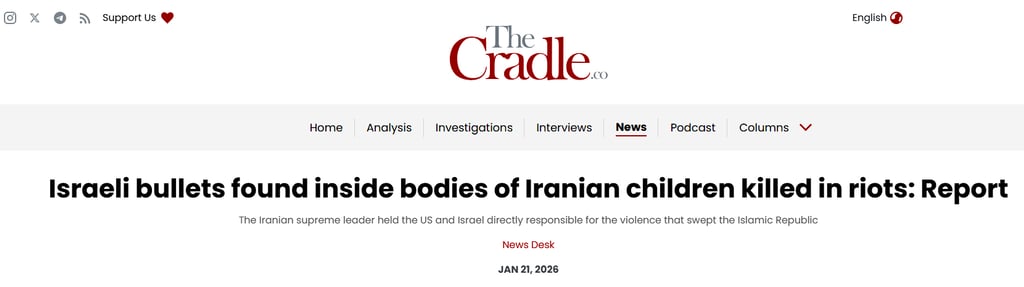
Israeli bullets found inside bodies of Iranian children killed in riots: Report
The Iranian supreme leader held the US and Israel directly responsible for the violence that swept the Islamic Republic
Forensic examinations have revealed Israeli military-grade ammunition embedded in the bodies of children killed during recent rioting in Iran, Russian news agency TASS reported on 21 January, citing Iranian security sources.
The source described the case of an eight-year-old girl in Isfahan who was fatally shot while out shopping with her family during the unrest. She was hit in the stomach, chin, and back of the head, with forensic analysis confirming the bullets were Israeli military-grade.
Another incident involved three-year-old Melina Asadi, who was killed on the evening of 7 January 2026 in Kermanshah while returning with her father from a pharmacy.
The child was shot from behind, with the source attributing the attack to armed terrorists.
The unrest began on 29 December 2025 following street protests sparked by a sharp fall in the Iranian rial.
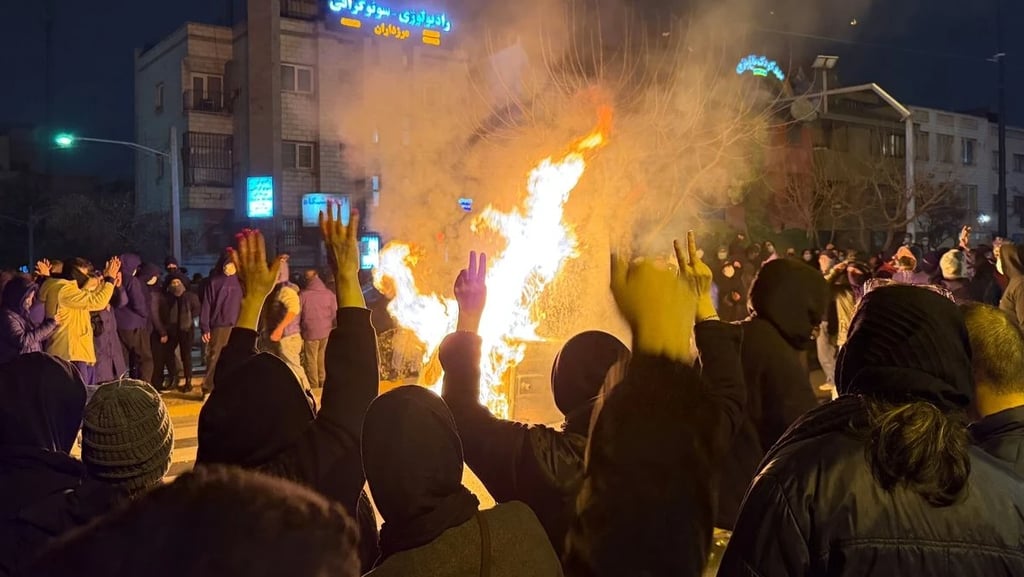
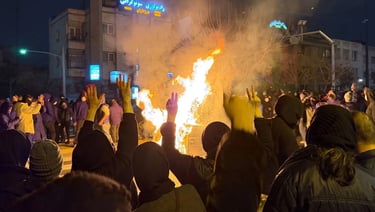
An unnamed Iranian official recently told Reuters that authorities had confirmed at least 5,000 deaths, including around 500 members of the security forces, revising earlier mid-January estimates that had placed the toll at roughly 2,000.
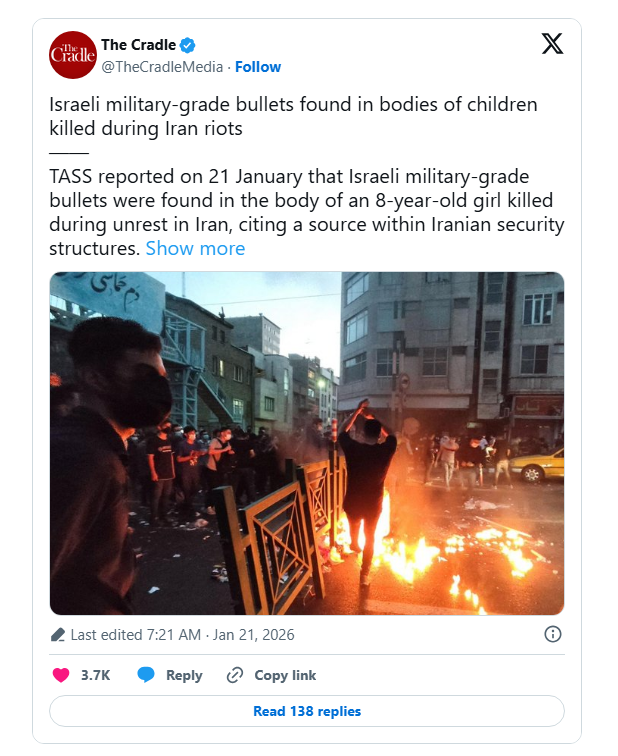
Iran’s Supreme Leader Ali Khamenei directly blamed the US and Israel for the killing of “several thousand” people during the unrest, saying actors “linked to Israel and the US caused massive damages and killed several thousand.”
In a nationally broadcast address on 17 January, he said, “We do consider the US president a criminal,” adding that those responsible “will not go unpunished,” while stressing that Tehran would not be drawn into a wider war.
On 13 January, Iranian police announced the detention of nearly 300 people accused of property damage and attacks on police officers.
Iranian Kurdish separatist group, the Kurdistan Freedom Party (PAK), admitted to carrying out armed attacks against Iranian security forces during recent unrest, portraying the actions as support for street protests.
Speaking to AP, a PAK representative said the group provided financial backing and launched operations in several western provinces after claiming that Iran's Islamic Revolutionary Guard Corps (IRGC) targeted demonstrators, asserting that the strikes caused “significant damage” to state forces.
Iranian Defense Minister Aziz Nasirzadeh accused the US and Israel of directly orchestrating recent violent unrest, saying Tehran holds “precise intelligence” that Washington and Tel Aviv coordinated separatist and armed networks to destabilize the country.
He said the plot relied on arms smuggling, financing, and logistics to fracture Iran under a US-Israeli “balkanization” plan.
Officials and pro-government outlets have cited death tolls ranging from the low thousands to several thousand, emphasizing the hundreds of security personnel killed and asserting that the situation was largely contained, with casualties framed as victims of external interference rather than state action.
info@situationpolitics.com
© 2026. SituationPolitics.Com - All rights reserved