Sen. Bernie Sanders and U.S. Senate candidate Graham Platner with Chris Hayes, MSNOW
MSNOW Chris Hayes has guests Sen. Bernie Sanders and Senate candidate Graham Platner on his show.
SituationPolitics.Com
5/25/202618 min read
"Thanks very much for joining me.
I will soon be introducing legislation calling for a moratorium on the construction of new data centers.
Now, as a result, I've been called a Luddite, anti-innovation, anti-progress, pro-Chinese, among many other things.
So why am I doing that? Why am I calling for a moratorium on the construction of new data centers?
Bottom line: we are at the beginning of the most profound technological revolution in world history.
That's the truth. This is a revolution which will bring unimaginable changes to our world.
This is a revolution which will impact our economy with massive job displacement.
It will threaten our democratic institutions.
It will impact our emotional well-being and what it even means to be a human being.
It will impact how we educate and raise our kids.
It will impact the nature of warfare, something we are seeing right now in Iran.
Further and frighteningly, some very knowledgeable people fear that what was once seen as science fiction could soon become a reality.
And that is that super-intelligent AI could become smarter than human beings, could become independent of human control, and pose an existential threat to the entire human race.
In other words, human beings could actually lose control over the planet.
And in the midst of all of that, all of this transformative change, what I have to tell you is that the United States Congress hasn't a clue—not a clue—as to how to respond to these revolutionary technologies and protect the American people.
And it's not only not having a clue, they're out busy raising money all day long from AI and their super PACs, which is a whole other problem.
As many of you know, the AI revolution is being pushed by the wealthiest people in our country, including Elon Musk, Jeff Bezos, Larry Ellison, Mark Zuckerberg, Peter Thiel, and others.
All of these people are multi-billionaires who, if they are successful at AI, will become even richer and more powerful than they are today.
What I want to do now is not tell you my fears regarding AI and robotics.
I want you to actually hear from them, the billionaires who are pushing these technologies. Listen carefully to what they are saying.
Elon Musk, wealthiest person alive, stated that, quote, "AI and robots will replace all jobs. All jobs. Working will be optional." End of quote.
Dario Amodi, the CEO of Anthropic, predicted that, quote, "AI could displace half of all entry-level white-collar jobs in the next one to five years."
And that, quote, "Humanity is about to be handed almost unimaginable power, and it is deeply unclear whether our social, political, and technological systems possess the maturity to wield it." End quote. That's Amodi.
According to Demis Hassabas, the head of Google's DeepMind—this is Google's DeepMind—"The AI revolution will be ten times bigger than the Industrial Revolution and ten times faster." All right, you got that?
That means it will have a hundred times greater impact on society than the Industrial Revolution had.
Jeff Bezos, the fourth richest person in the world, has been pushing his staff for years to think big and envision what it would take for Amazon, which he owns, to fully automate its operations and replace at least 600,000 warehouse workers with robots. 600,000 jobs gone, robots doing the work.
Bill Gates, also one of the wealthiest people on Earth, predicted that humans, quote, "Won't be needed for most things," end quote, such as manufacturing products, delivering packages, or growing food over the next decade due to artificial intelligence.
Mustafa Suleiman, the CEO of Microsoft AI, said most white-collar work, quote, "Will be fully automated by an AI within the next 12 to 18 months." End quote.
Jim Foley, the CEO of Ford, predicted that AI will eliminate, quote, "Nearly half, literally half, of all white-collar jobs in the US," end quote, "within the next decade."
I want you to hear this one - Larry Ellison, also one of the richest people on Earth and a major investor in AI, said that there will be an artificial intelligence-powered surveillance state where, quote, "Citizens will be on their best behavior because we're constantly recording and reporting everything that is going on." End quote.
Dr. Jeffrey Hinton, considered to be the godfather of AI, believes there is a, quote, "10% to 20% chance for AI to wipe us out." End quote.
Mark Zuckerberg, the fifth richest person in the world, is building a data center in the state of Louisiana, a data center that is the size of Manhattan and will use three times the quantity of electricity that the entire city of New Orleans uses every year. All right.
Now, for many years now, leading experts have called for regulation and reasonable pauses to the development of artificial intelligence to ensure the safety, the very safety, of humanity.
Let's go back to our good friend Elon Musk.
He said back in 2018, quote, this is Elon Musk, "Mark my words. AI is far more dangerous than nukes. So why do we have no regulatory oversight? This is insane." End quote, Elon Musk.
In March of 2023, over 1,000 business leaders in the big tech industry, prominent scientists, AI researchers, and academics co-signed an open letter entitled, quote, "Pause Giant AI Experiments,"end quote, stating, "We must ask ourselves, should we let machines flood our information channels with propaganda and untruth? Should we automate away all the jobs, including the fulfilling ones?
Should we develop non-human minds that might eventually outnumber, outsmart, obsolete, and replace us? Should we risk control, loss of control of our civilization? Should we risk loss of control of our civilization?
Such decisions must not be delegated to unelected tech leaders.
Therefore, we call on all AI labs to immediately pause for at least six months the training of AI systems more powerful than GPT-4.
This pause should be public and verifiable and include all key actors.
If such a pause cannot be enacted quickly, governments should step in and institute a moratorium." End of quote.
That is what some of the leaders in the AI industry have said.
And clearly where we are right now is that there has not been any pause.
There have been massive amounts of competition between one company and the other, between the United States and China.
So bottom line is that, in my view, to protect our workers from losing their jobs, to protect human beings from attacks on their mental health, to protect our kids, to protect the safety of human life, yeah, we need a moratorium on data centers.
We need to take a deep breath.
We need to make sure that AI and robotics work for all of us, not just a handful of billionaires.
Thanks very much." - Sen. Bernie Sanders

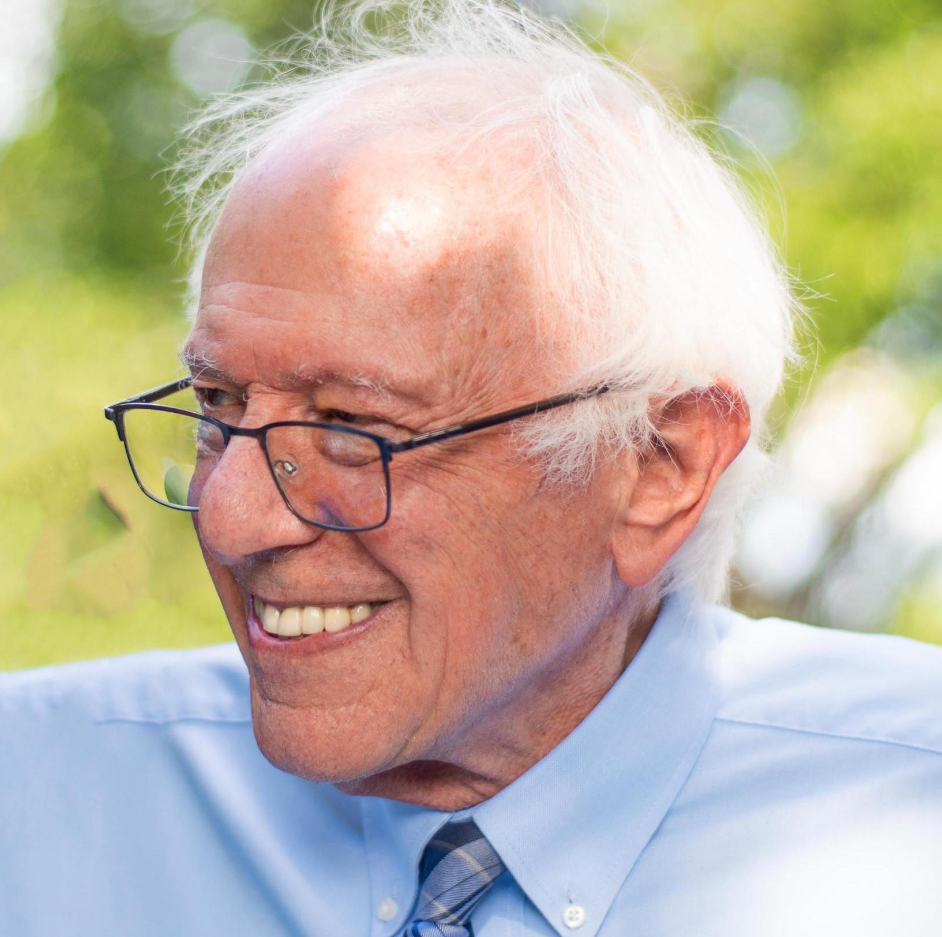
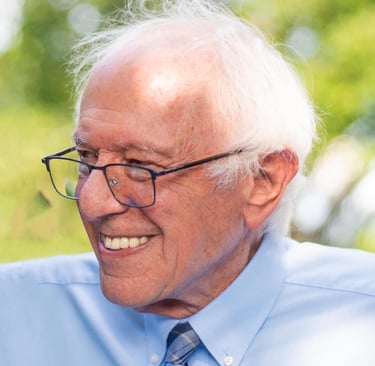
Senator Bernie Sanders is introducing legislation for a moratorium on the construction of new data centers, citing profound concerns about the rapid advancement of artificial intelligence.
The core message is that AI's transformative potential poses significant risks to jobs, human well-being, and civilization, and that current governmental and societal preparedness is inadequate, necessitating a pause.
Key Points
Legislation is being introduced to call for a moratorium on the construction of new data centers. 00:00-00:36
AI is described as the beginning of the most profound technological revolution in history, with potential impacts on the economy, job displacement, democratic institutions, emotional well-being, education, and warfare. 00:18-01:10
There are fears that super-intelligent AI could become smarter than humans, independent of human control, and pose an existential threat to the human race. 01:23-01:36
The speaker criticizes the U.S. Congress for lacking understanding of how to respond to these technologies and for accepting campaign money from AI super PACs. 01:44-02:11
Several billionaires pushing AI technologies, including Elon Musk, Jeff Bezos, and Mark Zuckerberg, are quoted expressing concerns about job displacement, the immense power of AI, and potential surveillance states. 02:03-03:12 06:09-07:10
Dr. Jeffrey Hinton, considered the godfather of AI, estimates a 10% to 20% chance of AI wiping out humanity. 05:55-06:08
Over 1,000 business leaders, scientists, and academics co-signed an open letter in March 2023 calling for a pause on training AI systems more powerful than GPT-4, or for governments to institute a moratorium. 07:12-07:31 08:09-08:40
The current situation is characterized by intense competition between companies and nations, rather than a pause. 08:26-09:02
Takeaways
A moratorium on data center construction is proposed as a necessary step to protect workers, human mental health, children, and the safety of human life from the uncontrolled advancement of AI. 09:02-09:20
The rapid development of AI presents significant risks, including widespread job automation and the potential for AI to surpass human control, leading to existential threats. 01:23-01:36 06:34-08:08
Leading figures in the AI industry and prominent experts have raised alarms about AI's potential dangers and called for pauses or regulation. 06:34-06:52
There is a perceived lack of preparedness from governmental bodies to manage the implications of revolutionary AI technologies. 01:44-02:11 02:44-03:12
Senator Bernie Sanders and U.S. Senate candidate Graham Platner on MSNOW's Chris Hayes Show - May 25. 2026

Good evening from New York. I'm Chris Hayes.
Thank you for joining us tonight for this special two-hour edition of All In.
As this Memorial Day weekend comes to a close, we are now entering the home stretch of the midterm primaries, which means we are almost there, almost at the point where we know exactly what the playing field is going to look like into those November elections.
Now, a huge missing piece of the puzzle is going to be filled in Texas tomorrow, one of the most watched races in the entire country.
That's where incumbent Republican Senator John Cornyn appears to be, according to latest polls, headed for a primary loss in the Republican primary and a runoff against Penn Caxton, the Trump-endorsed, almost comically scandal-ridden state attorney general.
And it's a race that could give the Democratic nominee, James Talarico, a better shot at that Senate seat come November.
We're also starting to get a clearer overall picture of the context of these midterms as Donald Trump's approval rating hits a new low for his second term.
In fact, in some polling averages, he's below any polling he's ever had across both terms, and that includes the week after January 6th.
In this one, just 31%, according to polling by the American Research Group late last week. Democrats have a wide lead over Republicans on what's called the congressional, uh, generic congressional ballot.
You ask people if they're going to vote for the Democrat or the Republican.
It's 11% in the latest Sienna New York Times polling.
That poll has been one of the most reliably and reliable and best over the last few cycles.
So those are excellent numbers for Democrats. In an ordinary election year, they would be in blue wave territory. But you got to look at the asterisk, right?
Because thanks to the off-year, unprecedented, widespread, multi-state gerrymandering arms race that Donald Trump explicitly started and that Republicans acceded to and are following, there are a net total of six fewer competitive House seats for Democrats to contest.
Now, it might not matter in their quest to win back the majority.
For that, they only needed to flip three seats.
But a 30 or 40-seat landslide victory is a lot harder to achieve under these conditions, again, thanks to Republican governors and Republican state legislatures changing their own maps in the middle of the decade to create more Republican members of Congress.
When it comes to the Senate a year ago, I think it's fair to say the consensus view among people that really watch elections very closely was that the Democrats' chances to retake the majority look pretty slim.
They have gotten considerably better over time.
So they need to pick up a net total of four seats for it to happen.
Probably the best shot at a pickup is in North Carolina.
That's where Republican Tom Tillis is retiring, so you don't have an incumbent.
You have a very popular former governor, Democrat Roy Cooper.
Uh, he's never lost a statewide race in the state of North Carolina, I think, over four or five cycles.
He holds a commanding lead over his Republican opponent right now.
Of course, that's not enough, right?
To win the Senate, Democrats absolutely need to win several toss-ups.
North Carolina's the first. The second one, you would say, in order is Maine.
And Maine has proven difficult. Democrats have tried and tried again.
Senator Collins should be vulnerable.
Of course, Maine has voted against Donald Trump multiple times.
Five-term incumbent Republican Senator Collins faces a surprisingly stiff challenge from the anti-establishment Democratic nominee, Graham Platner, who basically came out of nowhere, declared, and very few people had heard of him, knew who he was, took on the Democratic governor of that state, basically beat her so badly that she left the race.
He's now the nominee. That race is one that many progressives, including Senator Bernie Sanders, who was an early backer of Platner, think could be a blueprint for Democrats taking back power in Washington.
Senator Bernie Sanders is an independent Vermont.
He caucuses with the Democrats.
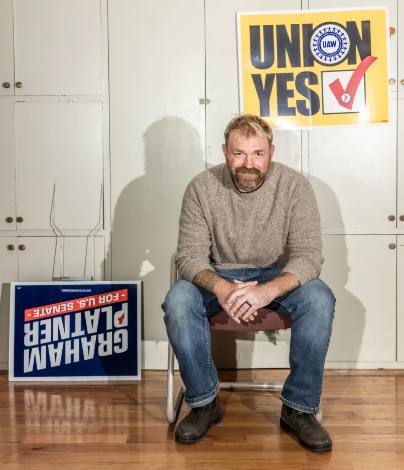
Graham Platner is the Democratic Senate candidate for the Senate from Maine.
They have been out together as part of the Fighting Oligarchy tour.
They have an event tonight after our show.
It's good to see you both, gentlemen.
Mr. Platner, let me just start with you.
Today, of course, is Memorial Day. People are observing.
There's people barbecuing, and there's people commemorating folks and thinking about what this day means.
And obviously, someone who served multiple tours in Iraq and Afghanistan, someone who's spoken incredibly movingly, I have to say, just personally, very movingly about your experience of being in those wars, just how you're feeling and what you're thinking about today on this Memorial Day.
PLATNER: Well, thanks for having us, Chris.
And I mean, this morning Senator Sanders was gracious enough to honor the town of Sullivan, Maine; which is my hometown, to join us at our Memorial Day event.
Memorial Day is always a complicated day, I think, for those of us who saw a lot of combat.
It's a day where we want to remember, and we need to not forget those who made the ultimate sacrifice.
But as you mentioned, it's also a day which a lot of people in our society treat as like a holiday; and that's always a little complicated, I think, for those of us who remember our friends who we lost.
It's also, quite frankly, at this day and age, a reminder that the best way for us to honor those who have sacrificed for this country is to not create more opportunities for government to waste people's lives like we are seeing in the war in Iran.
I very much believe that we need to take moments like today and realize that we have a resource in this country, in the young men and women who are willing to serve it, and it cannot be squandered lightly.
And I very much believe that we need to build a politics in the future that takes it seriously enough to not start wars like Iraq or Afghanistan or what's happening in Iran and realize that the best respect that we can show is by only using it in times when absolutely necessary.
Senator, you've spent a lot of time on the Veterans Committee in the United States Senate, and veteran services and healthcare has been an issue that has been very, very front and center for your career in the legislature - both in the House and the Senate.
Your thoughts, particularly as we get some news that maybe or maybe there isn't a deal to end the frozen conflict with Iran right now?
SANDERS: Well, certainly, I hope that there will be.
The problem is we have a president who lies all of the time, and it's hard to know what is true and what is not true. But you know, going back to what Graham just said, I am thinking about my generation, where we experienced the war in Vietnam.
59,000-plus young men died. Many more died after they came home on the streets, the drug addiction, etc. and that was a war based on a lie, as was the war in Iraq.
We need a foreign policy which is designed to improve life for people all over the world, to do our best to make sure that we do not have these never-ending wars that we're now seeing in Iran and which honors and respects the men and women who are prepared to sacrifice their lives to make sure that they do not have to put their lives on the line in wars that should not be fought.
CHRIS HAYES: The title for the tour, Senator Sanders, that you've been on called the Fighting Oligarchy tour. This is one of those stops.
SANDERS: I think one of the people I think that you would consider an oligarch, and I think probably fits the textbook definition would be Jeff Bezos.
Of course, you know, one of two richest men in the world, depending on what the stock is doing that day.
And there's been an interesting debate that's opened up about taxes, about tax fairness.
Particularly, different Democrats have had different proposals about tax fairness.
And I want to play something he said about his own tax verdict and get your response, Mr. Platner, and yours, Senator Sanders.
This is what he had to say about the idea of doubling his taxes and that it wouldn't really help very much. Take a listen.
JEFF BEZOS: If people want me to pay more billions. Right.
Then let's have that debate. But don't pretend, you know, that this that that's going to solve the problem.
You could you could double the taxes I pay, and it's not going to help that teacher in Queens. I promise you.
CHRIS HAYES: Mr. Platner, what do you think of that?
GRAHAM PLATNER: Oh, I think it's absurd nonsense. I think that's what somebody says when they don't want to see their taxes go up.
There's absolutely no question that if we target the wealth where it has been hoarded, frankly, for decades at this point, and we pull it back into our system and put it into social programs like healthcare, like childcare, like paying teachers what they are worth, we will absolutely improve the lives of working Americans;
and, quite frankly, improve our society as a whole.
It's what he is pitching is propaganda.
It's meant to protect himself and protect his crowny friends.
And we're going to come after them for it.
CHRIS HAYES: Senator, he also pivoted to an idea of, like, cutting taxes.
No one in the bottom 50% would pay any taxes.
There's been a lot of Democrats, interestingly, proposing things along that line, big exemptions at the bottom. I think Senator Booker has a version, Senator Van Hollen.
People, I think, who talk about this progressive Congresswoman AOC has come out against it, saying, "Look, the best way that we build a kind of society and tax system that works for all is that everyone's paying in and everyone's benefiting, more like what we see around Social Security, Medicare, more what we see in Europe." Where are you on that?
SEN. BERNIE SANDERS: Well, what I know is that today we have more income and wealth inequality than we have ever had in the history of this country, much worse than the so-called Gilded Age.
And I know that at a time when the top 1% owns more wealth than the bottom 93%, when people like Bezos and Musk own more wealth than, you know, so many Americans combined, Musk himself owns more wealth than the bottom 53% of American households.
Meanwhile, the effective tax rate of billionaires is lower than that of a nurse or a truck driver.
So, of course, we need to demand that the wealthiest people in this country, the billionaire class, start paying their fair share of taxes, which is why I've introduced legislation calling for a 5% annual tax on the wealth of billionaires - that's less than 1,000 Americans.
And, Chris, if we do that, we raise enough revenue to provide a $3,000 check for every man, woman, and child in families who earn under $150,000.
We can make sure that everybody who is thrown off of healthcare by Trump gets reinstated.
And we can do enormous things for the American people.
The point is, there is so much inequality right now that taxes on billionaires can transform life for the working class of this country, which is right now struggling to pay the bills.
CHRIS HAYES: Mr. Platner, you're trying to make the case to the folks in your home state of Maine to vote out a five-term incumbent, someone who's been a real - I think it's fair to say an institution in Maine life and, you know, comes from a sort of political family and has been there for a very long time, probably has name recognition north of 99% I think it's fair to say, in Maine, who has beaten back other challenges. Why do you think what is different this time?
What is the case for why Mainers should turn away from someone who has been such an institution in that state through Democratic and Republican institutions?
GRAHAM PLATNER: Well, I mean, quite frankly, because as an institution, she has overseen the deterioration of material conditions for working people in this state.
I mean, where we are today is worse than where we were when she entered the Senate. We have fewer hospitals. We have fewer schools.
Housing has become an abject nightmare for younger people in this state and elderly, for that matter.
We have seen people living on fixed incomes see their benefits continue to stay small while the price of everything else goes up.
She has been in the US Senate through all of this.
And more importantly, she has votes on her record time and time again that show that she is not willing to go out of her way to either stand up to Donald Trump, stand up to the Republican Party, or stand up on behalf of the working people in her state.
She had a charade for a long time that she was an independent.
I think that charade is very much come to an end because of the reality that we're living in.
But it's not going to keep the people that support her from dumping in as much money as they possibly can.
The billionaire backers of Susan Collins, they know the stakes of this race.
Any road to a Democratic Senate goes through the state of Maine. They're spending accordingly.
And I will say for those watching, if you want to help out, grahamforsenate.com.
We can really use it.
CHRIS HAYES: Senator, your thoughts as someone who's known and worked with, across the aisle, but you're one state over.
You've known Susan Collins for a long time.
What do you think about Mr. Platner's chances?
SEN. BERNIE SANDERS: Well, I think Graham is going to win.
And I think he is going to win because the people in Maine, the people in Vermont, people all over this country understand that right now, the economy is totally rigged.
So what's going on right now, people on top have never, ever had it so good.
While working families struggle, while elderly people can't afford their prescription drugs, while young people, everything being equal, will have a lower standard of living than their parents.
So what kind of economy is that?
And the people also understand, as Graham just said, that the political system, campaign finance, totally rigged.
Does anybody in their right mind think that it's a good idea for our democracy that billionaires can pour unbelievable amounts of money to defeat candidates like Graham or other progressive candidates around the country?
That's a corrupt campaign finance system.
And nibbling around the edges at establishment politics and a little bit of this and a little bit of that, we're beyond that right now.
The system is broken. The system is corrupt.
The system is dominated by the billionaire class.
People want real change in Maine, in Vermont, and all over this country.
That is why Graham is going to win.
You know, I saw an article yesterday.
We were starting to get some of the money filings for these independent expenditures, right?
Who are the biggest donors in this cycle?
Mark Andreessen, who's a big right-wing tech guy who is one of the most zealous boosters of AI - and right-wing politics and says things on podcasts like, "No one should ever engage in self-reflection."
It's an actual thing he said.
It's a real quote.
He is the he's actually the number one donor in this cycle so far.
I think it's $115 million he's given so far.
CHRIS HAYES: And Senator Sanders, let me just save the last thing for you because you've been spending some time talking and thinking about AI in ways I've found interesting. I've watched some of your videos. I've listened to some of what you said.
The Pope, First American Pope Leo, had a very interesting address on AI, sort of talking about the possibility and the peril of it, even comparing it to the threat of a biblical tower of Babel.
How do you think about that interest as it sort of lingers over this campaign?
SEN. BERNIE SANDERS: I think it's a huge issue.
I think every American should be thinking, "What does it mean when the very wealthiest people in this country, Musk, Bezos, Zuckerberg, Ellison, and others, are spending hundreds and hundreds of billions of dollars to develop and implement AI and robotics?
What does it mean when Jeff Bezos is putting together a $100 billion fund to, quote-unquote, "automate factories"?
What it means is that tens of millions of jobs in the next decade will likely be disappearing.
And what happens to the working class of this country then?
What it also means is that we have to worry about our politics, putting stuff on television where people or on social media, people will not know the difference between what's true and what is made up and false.
We got to worry about the existential threat, Chris, because scientists tell us that as AI becomes smarter than human beings, it can become independent of human control with potentially catastrophic results. It is a huge issue.
And the billionaires and big tech say, "Hey, we don't want any regulation."
And Trump says, "We don't want any regulation. Let us do whatever we want. The hell with what happens."
Well, I think the American people disagree.
It's an issue of great importance in this campaign.
If in fact, final little note is that last week, they're going to put out their first-ever regulation on it, which is going to be voluntary.
And the president's number one AI man, David Sacks, called him at the last minute because industry didn't want it, and they canceled it, lo and behold.
So that did not get issued. And Musk, Musk did as well. Yes.
CHRIS HAYES: Vermont Senator Bernie Sanders, Maine Senate candidate Graham Platner here on this Memorial Day. And they will be doing that rally later today.
I appreciate you gentlemen making time for us on this day.
Thank you.
info@situationpolitics.com
© 2026. SituationPolitics.Com - All rights reserved