SituationPolitics.Com Debunks and Deconstructs Ben Samuel's History and Future of U.S. Aid to Israel
Haaretz published Ben Samuels "Explained: The History and (Fragile) Future of U.S. Military Aid to Israel"
SituationPolitics.Com
1/2/20268 min read


Explained: The History and (Fragile) Future of U.S. Military Aid to Israel
Ben Samuels: "A closer look at the history of U.S. aid to Israel and Netanyahu's proposal to phase it out reveals less a rupture with Washington than a strategic recalibration shaped by Trump-era isolationism, domestic U.S. politics, and Israel's enduring dependence on American power"


WASHINGTON – Prime Minister Benjamin Netanyahu's call to phase out U.S. military assistance to Israel in the next 10 years, at face value, appeared to be a game-changing proposal that would dramatically alter one of the world's most significant geopolitical relationships.
Netanyahu's proposal, first made in an interview with The Economist earlier in January, was later echoed by one of Israel's most important Republican Party allies, Sen. Lindsey Graham, who said he would expedite a proposal for both the Israeli government and the Trump administration.
Graham's support only lent further weight to its supposed seriousness, at a time when logic would suggest that supporters of the U.S.-Israel relationship would push for a renewal (and perhaps an extension) of the 10-year, $38 billion memorandum of understanding set to expire in 2028.
This is particularly pressing as Israel's standing in Washington is as politically delicate as it has ever been, with camps within both the Democratic and Republican Parties zeroing in on military aid as emblematic of key problems in the bilateral relationship.
A short history of U.S. aid to Israel
In order to understand the path forward, it is beneficial to understand how U.S. assistance to Israel has traditionally worked and how it works today.
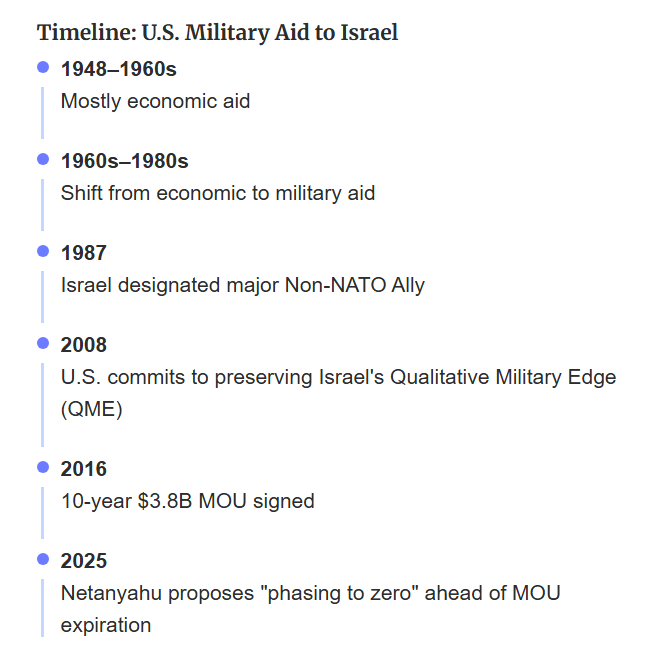
Israel has received over $300 billion in financial assistance since its founding, with military assistance gradually becoming the preferred engine of aid over economic assistance between the 1960s and 1980s.
Over the past two-and-a-half decades, military assistance has entirely superseded economic aid.
The United States mainly sells weapons to Israel under the Foreign Military Financing program, which requires Israel to purchase U.S.-manufactured weapons.
This manifests through foreign military sales, in which the U.S. serves as the middleman between private companies and Israel, and direct commercial sales, in which private firms sell directly to Israel after securing State Department export licenses.
Israel is one of a handful of U.S. allies permitted to use foreign military financing to purchase weapons through direct commercial sales as well as foreign military sales, while it is also permitted to purchase additional defense items beyond this framework.
This is how the Biden administration advanced $20 billion in weapons sales to Israel in 2024 beyond the annual $3.8 billion stipulated in the most recent memorandum of understanding.
The U.S. has deemed Israel a major non-NATO ally since 1987, enabling Israel to access excess defense equipment from the U.S. (among other benefits).
The U.S., meanwhile, has been obligated since 2008 to uphold Israel's qualitative military edge in the Middle East, banning weapons sales to states that would otherwise compromise its dominant status.
What are the conditions?
While U.S. military aid to Israel has rarely been curtailed, various U.S. presidents over the decades have used the threat of suspending assistance as a means to effect political change.
This was first demonstrated when the Eisenhower administration threatened to withhold assistance during the 1956 Suez crisis, and again 20 years later by the Nixon and Ford administrations amid Israel's resistance to U.S.-backed Sinai disengagement plans.
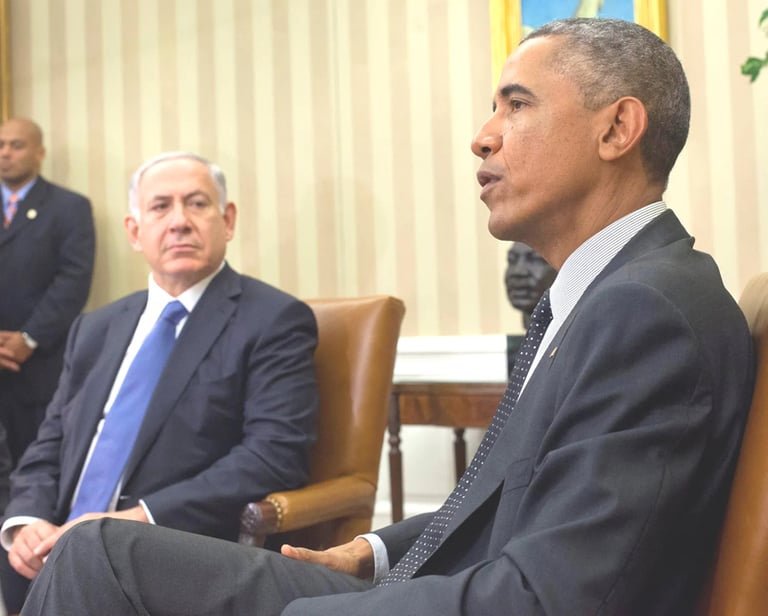
The Obama administration was rumored to have floated a reconsideration of aid amid Netanyahu's support for settlement expansion, while the Biden administration repeatedly warned that Israel's conduct in Gaza and the West Bank could legally compromise U.S. military assistance.
In May 2024, Biden paused a shipment of 2000-pound bombs as Israel was approaching a decision to launch a full-scale assault on the southern Gaza city of Rafah against the wishes of the U.S.
While it was a small gesture intended to send a discrete message, it spiraled into a crisis that defined the Biden-Netanyahu relationship's legacy.
Amid these crises, progressive members of Congress have sought to block specific arms sales or attach conditions on aid based on end-use restrictions. While these efforts have so far made little headway, they are now finding unprecedented support, suggesting that such measures are gaining momentum in the United States.
So what has changed — and why now?
U.S. President Donald Trump has long criticized foreign military aid, challenging longstanding GOP orthodoxies – including the party's relationship with Israel.
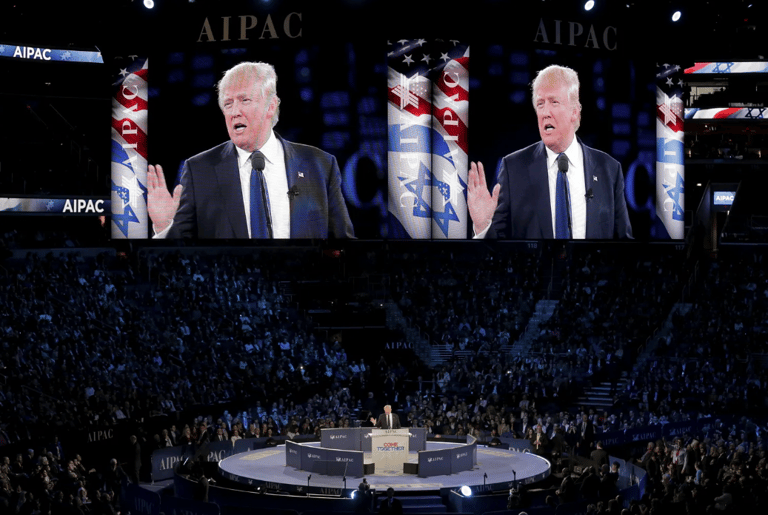
In fact, Trump explicitly called for Israel to pay for its own defense like any other country while appearing at the 2016 American Israel Public Affairs Committee policy conference.
Trump entered office shortly after the Obama administration finalized the 2016 Memorandum of Understanding – one of its last major legacy moves in the Middle East –following Netanyahu's unprecedented politicization of Israel's standing in Washington.
Under the agreement, $3.3 billion was earmarked for Foreign Military Financing, with an additional $500 million designated for missile-defense programs.
To Netanyahu's delight, military aid was one of the few elements concerning Israel and the Middle East that Trump did not totally upend during his first term.
When Joe Biden assumed office, military aid continued unabated and grew to unprecedented levels following October 7 and the Gaza war.
In the year since Trump returned to the White House, Netanyahu – ever the savvy reader of American political trends – has clearly understood that Trump's hostile view of foreign military aid combined with the growing America-First isolationist bend within his base will dictate the future of U.S. military assistance.
This further comes as Trump has temporarily focused the fount of his ire toward U.S. military spending and lofty budget goals.
When such financial considerations are expected to coincide with Republicans' anticipated struggles in the 2026 midterms, combined with Trump's infamously hardball negotiation tactics, talks on any new deal would undoubtedly not go the way that Israel would want.
For Netanyahu, such desires are framed as a push for self-sufficiency, while his allies in Washington suggest that such 'weaning' off U.S. aid would enhance Israel's burgeoning status as an independent world power, not beholden to America's domestic political winds.
In reality, however, Netanyahu's efforts are as motivated by these American considerations as by his stated goal of transforming Israel into a "Super-Sparta" amid its growing diplomatic isolation on the world stage.
How realistic is 'phasing to zero within 10 years'?
The idea of "phasing to zero within 10 years" may sound ambitious, and carries little practical weight. It also discounts the fact that private military contracting and intelligence sharing undergird a significant component of Israel's strategic role as a key U.S. ally.
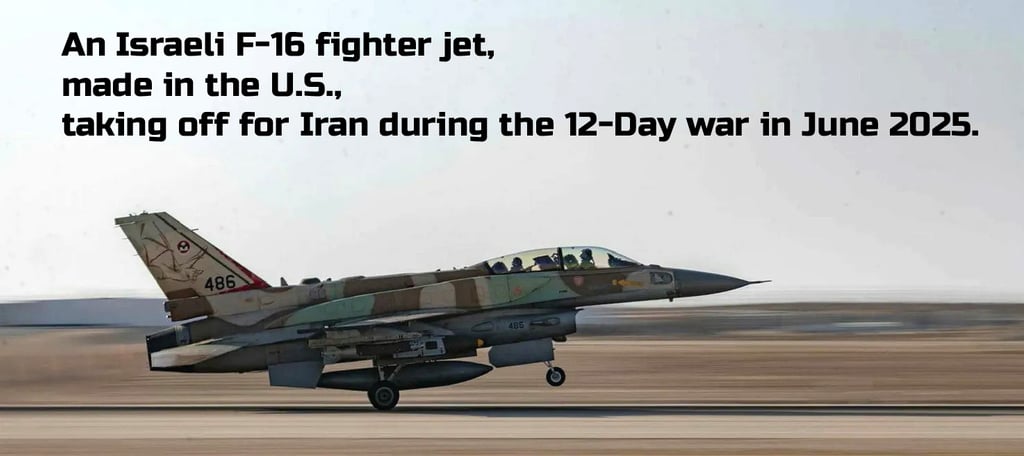
Any empty gestures toward an America First–Israel First, separate-but-equal relationship are irrelevant in a future where both sides will inevitably rely on one another, whether the U.S. needs Israel in broader great-power calculations or Israel depends on American defense and support against threats.
For example, if Israel were to launch a new military campaign against Iran and Tehran responded as it did in the June 2025 war, any notion that the U.S. would refrain from fully backing Israel is divorced from reality – even if the idea of a "Super-Sparta" Israel were hypothetically within reach.
Furthermore, supposed self-sufficiency would shed Israel of even its nominal obligations to abide by the well-defined standard of human-rights commitments as a recipient of U.S. military aid – even if successive U.S. governments have failed to enforce their legally mandated end of things.
Despite all of Netanyahu's overtures to Trump, his vision for Israel remains far off. The immediate future is likely to resemble a more familiar reality: Israel will act unabated by hypothetical American reprisals, accelerate its own military technological developments at breakneck speed, and keep a watchful eye on the shifting political winds in both political parties in America.
There is a real chance that both presidential candidates in 2028 will support rethinking blanket U.S. support for Israel.
What kind of person writes about Israel, Netanyahu and U.S. military aid to Israel without mentioning the following facts:
Fact One: Netanyahu is a war criminal, a fugitive from justice who has engineered and commanded massive Israeli war crimes against the Palestinian people; including the mass murder of upwards of 100,000 Palestinian men, women and children.
Fact Two: Netanyahu used American made and provided weapons to execute over 100,000 Palestinian men, women, children and babies in a state-sponsored frenzy of mass murder, targeted killing of CHILDREN without any restraint or reservation whatsoever.
Fact Three: U.S. law strictly prohibits the U.S. government from providing U.S. arms to ANY GOVERNMENT who uses U.S. arms in the state-sponsored commission of war crimes, or in any offensive capacity whatsoever.
See, U.S. ARMS EXPORT CONTROL ACT, U.S. FOREIGN ASSISTANCE ACT, PAT LEAHY LAW
Fact Four: U.S. officials, including U.S. Presidents, Senators and Congresspersons intentionally violated U.S. law to illegally provide American made weapons to Israel which Netanyahu and the IDF used in the state-sponsored commission of war crimes.
Fact Five: Netanyahu, the ultimate war criminal, maliciously and intentionally committed state-sponsored genocide against the Palestinian people by systematically bombing and destroying well over 95% of all Palestinian society, infrastructure, hospitals, homes, apartment buildings, universities, mosques and U.N. facilities using American made and provided bombs, bullets and billions.
Fact Six: Netanyahu planned, plotted and executed a state-sponsored genocide against the Palestinian people by destroying nearly all Palestinian living quarters, executing forced migration, ordering and executing the state-sponsored starvation, denial of food, medicine and international assistance while tent bombing Palestinians living amongst the concrete rubble.
Fact Seven: Netanyahu ignored international law, ignored human rights and dignity, while citing ancient religious text to justify Israel's mass murder, genocide, land theft of the Palestinian people.
Fact Eight: Netanyahu "Swatted the Hornet's Nest" to instigate a major attack on Israelis located and living near Israel's open-air concentration camps that Israel has been unlawfully maintaining and operating for decades.
Ben Samuels actually wrote an article about U.S. military aid to Israel without mentioning Israel's illegal occupation, illegal military blockade of Palestinians living on Palestinian soil.
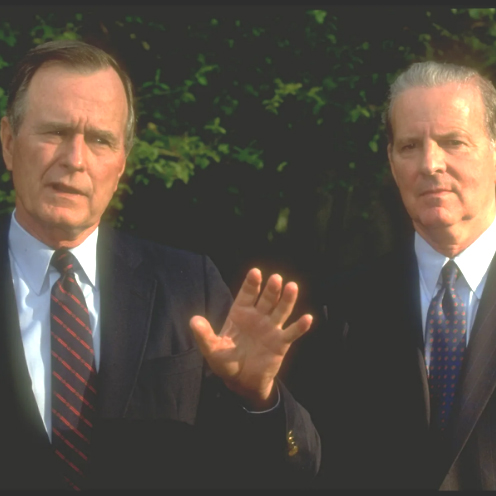
Ben Samuels wrote an article about the history of U.S. military aid to Israel without mentioning President George H.W. Bush Sr. and his U.S. Secretary of State James Baker warning Netanyahu and the Israelis: if Israelis ever wanted any peace with Palestinians, Israel must END ISRAEL'S OCCUPATION, MASS IMPRISONMENT AND BLOCKADES against the Palestinian people.
Ben Samuels didn't even mention how President Bush Sr. and James Baker told Netanyahu and the Israelis if Israel didn't forcibly remove illegal Israeli settlers from illegal Israeli settlements on Palestinian soil that the Bush administration would cut off all U.S. funds to Israel.
info@situationpolitics.com
© 2026. SituationPolitics.Com - All rights reserved