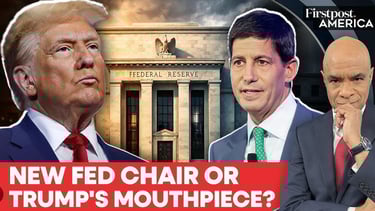
Trump's New Fed Chair, Kevin Warsh Has New Plans for the Economy and Federal Reserve
Kevin Warsh has ideas about reducing the national debt and interest, but the wrong ideas.
SituationPolitics.Com
4/23/202627 min read
Key Points
What significant event is happening at the Federal Reserve Bank on May 15, 2026?
On May 15, 2026, the chairman of the Federal Reserve Bank is changing from Jerome Powell to Kevin Warsh.
Why can't the President of the United States fire the Federal Reserve Bank chairman before his term expires?
Because the Federal Reserve Bank is not federal and operates independently, the President cannot fire the chairman until his term expires.
What is the main problem the United States is facing regarding its national debt?
The United States has over $39 trillion in national debt, with rapidly increasing interest payments exceeding $1 trillion per year, which strains government finances.
What is financial repression, and how was it used historically to manage U.S. debt?
Financial repression is a strategy where the government keeps interest rates artificially low, below inflation, and forces institutions to buy government bonds at low rates, effectively reducing the real value of debt. It was used after World War II to manage high debt levels.
How did the debt-to-GDP ratio change from 1946 to 1974 in the U.S.?
In 1946, the debt-to-GDP ratio was 106%, and by 1974, it decreased to about 25% because the economy grew faster than the national debt.
What are the three main points of Kevin Warsh's plan as the new Federal Reserve chairman?
Kevin Warsh plans to cut interest rates, shrink the Federal Reserve's balance sheet by selling treasuries, and use AI to help reduce inflation by increasing productivity and lowering costs.
Why does Kevin Warsh want to cut interest rates, and what effect would this have on the national debt?
Cutting interest rates would lower the cost of servicing the $39 trillion national debt, making it cheaper for the government to pay interest and reducing the tax burden.
What potential challenge arises from the Federal Reserve selling off treasuries?
Selling treasuries could increase interest rates because the government would need to offer higher rates to attract private lenders to buy the debt the Fed is no longer purchasing.
How might AI help in managing inflation according to Kevin Warsh?
AI could help by lowering business costs, increasing productivity and efficiency, which would reduce inflationary pressures even if interest rates are cut.
Who are the likely losers and winners in a financial repression scenario?
Savers and those holding cash lose value because interest rates are below inflation, while investors in assets like stocks, real estate, gold, and other investments tend to gain wealth.
Why is it important for individuals to invest in assets rather than just save cash during inflationary times?
Because inflation erodes the value of cash savings, investing in assets helps grow wealth as asset prices generally rise with inflation, protecting and increasing purchasing power.
What historical lesson does the video suggest about how the U.S. government handles debt crises?
The government typically does not pay off debt directly but manages it through financial repression, growing the economy faster than debt and keeping interest rates low to reduce debt costs.
What is the significance of the debt-to-GDP ratio being higher in 2025 than after World War II?
A higher debt-to-GDP ratio indicates a more severe debt burden relative to the economy, raising concerns about the sustainability of government finances and the need for effective management strategies.
How does the Federal Reserve Bank create money to lend to the government?
The Federal Reserve prints money to buy government treasuries, effectively creating new money that is lent to the government.
What might happen if private demand for U.S. treasuries is insufficient when the Fed sells its holdings?
The government might need to introduce new laws or regulations to compel institutions to buy treasuries, similar to past financial repression measures.
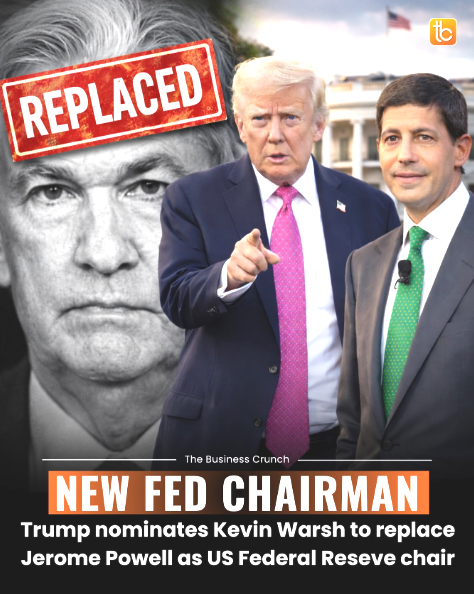
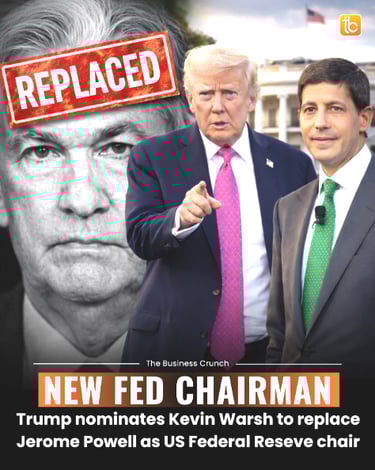
On May 15, 2026, Kevin Warsh is set to become the new chairman of the Federal Reserve Bank, replacing Jerome Powell.
This leadership change is significant amid the U.S. national debt crisis, with debt exceeding $39 trillion and a debt-to-GDP ratio of about 125%, worse than post-World War II levels.
Historically, the U.S. managed such debt crises through financial repression—keeping interest rates artificially low, below inflation, and compelling institutions to buy government bonds at low yields, effectively inflating away debt.
Warsh's plan includes cutting interest rates by one percent to below inflation, shrinking the Fed's balance sheet by selling treasuries, and leveraging AI to reduce inflation by boosting productivity.
While these measures aim to reduce debt servicing costs and control inflation, they may disadvantage savers earning low returns and benefit investors holding assets.
The text advises investors to shift from cash savings to assets to protect and grow wealth during these economic changes, highlighting that inflation tends to enrich asset holders while diminishing the value of cash savings.
SituationPolitics.Com
Trump's new Federal Reserve Chairman Kevin "Warlock" Warsh's economic plans are austerity for the poor and middle class and unlimited wealth for the super-wealthy class.
Trump Warlock Warsh wants to win by forcing Americans to accept lower interest paid on your savings and retirement accounts in order to "help" pay down the $39 trillion national debt.
Warsh loves Americans so much that he wants to reduce the amount of interest banks usually pay to bank customers on their savings and retirement accounts and use those funds to pay down the national debt.
Pure foolishness.
He's a real genius, isn't he?
None of these bozos will devise a plan to eliminate the national debt altogether and STOP borrowing money via the Federal Reserve and selling T-bills to fund the U.S. Government.
There is a much better way to solve this perennial pain-in-the-ass and it's certainly not by imposing austerity measures for the poor and middle class.
First of all, no amount of cutting corners and pinching pennies will ever eliminate America's growing $39 trillion debt.
Republican and Democrat donors and all 12 Federal Reserve Bank Governors do not want to eliminate the national debt, nor do they want the average American to greatly benefit from the full faith and credit of the federal government without 12 private banking groups getting their cut of the top every morning before Americans roll out of bed.
There's little to nothing federal about the "Federal Reserve." The so-called "Federal Reerve" is a private banking consortium of twelve banking entities who profit by existing in a federal government funding loop they have no business operating in.
The solution is to take action that greatly benefits the average American, of course.
Instead of Congress borrowing money from the Federal Reserve or by selling T-bills Warlock Warsh style, Congress should DIRECT DEPOSIT PAPER instead of selling paper - cut out the middleman Federal Reserve altogether.
Wait what?
I said Congress could constitutionally and legally create a U.S. Currency Instrument in any amount Congress sees fit and deposit said U.S. currency instrument directly into U.S. Government bank accounts at the U.S. Treasury; INSTEAD OF what Warlock Warsh recommends and INSTEAD OF what we've been doing - which is to sell T-bills to foreign investors and foreign governments to raise funds for U.S. government operations AND having to pay interest on those T-bills.
There is NO NEED for our U.S. Congress to hock our government to foreign countries and foreign investors AND pay them interest on it.
I recommend Congress create a U.S. Currency Instrument in the amount of $70 trillion and deposit it into the U.S. Government bank account at the U.S. Treasury Department:
*$40 trillion to pay off the national debt;
*$30 trillion for U.S. government operations, obligations and programs for the next four years.
Congress is fully authorized by the U.S. Constitution to create currency at will.
There is no need for Congress to borrow money from anyone.
Our Founding Fathers hated central banking and bankers so much that they loaded up on wooden ships and sailed away from central banking to find a new land to build a government featuring a Congress and People free of central banking and bankers.
Congress constitutionally funding our government facilitates a new system of financial governance free of borrowing, debits and credits in favor of an approval system and ratings system operated by We The People.
What?
Instead of a U.S. Government balance sheet with credits and debits, we employ a rating system and an approval system that directly benefits We The People without middlemen and excuses.
The realization is in recognizing that a government can appropriate value to the people WITHOUT borrowing money or hocking our government to foreign investors.
For example, Congress could impose a four-year, federally-funded price freeze on groceries to end the 8% inflation increase on groceries that consumers pay every day in America.
It is essential for voters/consumers to understand that we cannot outlaw greed, but we can control our quality of life by using the full faith and credit of our U.S. Government to improve the lives of We The American Poor and Middle Class instead of increasing the bank accounts of corporations, billionaires, the super-wealthy class.
Interesting how many billionaires, Republicans, Democrats, CEOs live "high on the hog" but will fight like hell to make damn sure that the poor and middle class don't live "high on the hog" i.e., federally-subsidized healthcare, education, housing, nutrition programs.
When a government doesn't have to borrow money and pay interest on that borrowed money, a government and people can have nice things, such as 100% federally-subsidized:
*Healthcare;
*Education;
*Nutrition;
*Childcare and Adult care;
*Roads and Bridges;
What About This "Rating System?"
We The People could employ the use of a ratings system to rate federal programs and adjudicate and adjust federal programs accordingly.
What About This "Approval System?"
We The People could employ the use of an application/approval system for the purpose of federally-subsidized purchases.
For example,

What About Inflation and Congressional direct funding of government?
On May 15, 2026, the Federal Reserve Bank is going to reset, and most people are not going to hear about it until they feel it in their wallet. What's happening on May 15? The chairman at the Federal Reserve Bank is going to change, and he has a new plan on how to shrink the debt crisis here in the United States.
The only problem is you cannot fix the debt problem without causing some sort of pain, and that's the thing that most people don't understand, but it also creates opportunity for the financially savvy.
And in this video, I want to break down what might be coming, that way you can be better prepared, not just to not hurt financially, but also to find opportunity to grow your wealth even faster. So let's break it all down.
Just so we're on the same page, the Federal Reserve Bank is the central bank here in the United States, and although they're called the Federal Reserve Bank, they're actually not a bank because you and I cannot go there to deposit money. And they're also not a reserve because they're not sitting on any cash reserves, and they're actually not federal.
It says so on their website, and the reason why that matters is because that means the government cannot tell the Federal Reserve Bank what to do.
You might have heard in 2025 and 2026 how vocal President Trump was against the chairman at the Federal Reserve Bank because the previous and current chairman at the Federal Reserve Bank did not want to cut interest rates as fast as President Trump would have liked.
Now, you might say, "Can't Trump just fire Jerome Powell, who was the current chairman at the Federal Reserve Bank?" Well, the answer is no, because Jerome Powell is the chairman at the Federal Reserve Bank, and they're not federal, so President Trump cannot tell him what to do, and he cannot fire him.
But this is where things are going to change on May 15, because that's when Jerome Powell's term is going to expire, and once his term expires, that's when President Trump can appoint a new chairman at the Federal Reserve Bank.
And the only reason he can do that is because Jerome Powell's term is expiring, and that's why on May 15, a guy by the name of Kevin Warsh is supposed to be the new lead, the new chairman at the Federal Reserve Bank, and he has a very different agenda than Jerome Powell.
Now, the reason why this is so important is because the Federal Reserve Bank controls the strongest currency in the world. The Federal Reserve Bank is in charge of controlling the United States dollar and the United States economy. And so when you have a new chairman at the Federal Reserve Bank, it could change the trajectory of the economy, the value of your dollar, and inflation.
And Kevin Warsh is coming into the Federal Reserve Bank at a very important time becauseright now the United States government has over $39 trillion of national debt, which is a problem.
But the even bigger problem is the payments on this debt because the United States government has one form of revenue, and that revenue comes from tax dollars from taxpayers.
And the fastest growing expense for the United States government is not the military, it's not infrastructure, it's not research and development.
It is interest payments because now we are paying more than $1 trillion a year just on interest payments on this debt.
And that means more and more of your tax dollars are being used not to provide you a service, not to benefit you, not to benefit your kids, but to just pay back previous expenses plus interest.
Now, before I get into the plan to try to erase the national debt, the other thing that I want you to be aware of is that when the Federal Reserve Bank makes a decision, whether it's to cut or raise interest rates, whether it's to print money, it has to be a majority vote decision at the Federal Reserve Bank, and there are 12 members that
are voting inside of the Federal Reserve Bank.
Soright now, Jerome Powell is doing things that President Trump at the government does not want, and now President Trump is working to replace Jerome Powell with somebody who will do what President Trump wants, which is Kevin Warsh, which is one more vote in favor of trying to do the things that President Trump wants, which are lower interest rates and
potentially more money printing to stimulate the economy. Yes, there are consequences to that, which is inflation, but that's what President Trump wants. This is where many people wrongly think that the way the government is going to solve this debt crisis is by paying off the debt.
That's not what we've seen throughout history because, well, history doesn't exactly repeat itself. It does rhyme.
Let me show you how the government has tried to make their debt problems go away without paying off the debt and, in fact, doing the opposite by taking a look at what we've seen happen in the United States in history that way we can better predict what might be coming in the future. And I want to remind you that these are the type of things that we've been keeping you posted on in Market Briefs.
Market Briefs is my free daily newsletter for investors where every day my team is working to break down what's happening in things like the economy, housing, stocks, crypto, and global markets into a fun, witty, and easy-to-read newsletter. It's read by hundreds of thousands of investors every morning. You can read it less than five minutes every day.
And as an added bonus, when you sign up for Market Briefs, you're also going to get access to my free investing masterclass as a bonus to level up your knowledge as an investor. So if you want to get my investing newsletter plus the free investing masterclass, all for free, all you have to do is sign up, and I have the link for you down in the description below.
See, the United States doesn't try to pay off their debt. They try to inflate their debt away. Let me show you what we did in the past. In the 1940s, after the Great Depression, after World War II, national debt in the United States exploded, and it created a debt crisis. And the way the United States solved this debt crisis was not paying off the debt.
It was by doing something called financial repression. To keep this as simple as possible, I'm going to start by showing you the numbers. That way, you can see the impact of financial repression, and then I'll tell you how the government actually did this financial repression.
In 1946, after the national debt exploded from the Great Depression and World War II, we had $271 billion of national debt while our economy, which is measured through a number called GDP, was $222 billion large, which means we had a debt-to-GDP ratio of 106%.
We had more national debt than the size of our economy. And this was the beginning of the financial repression in the United States because this was a problem. We had so much debt that we had more debt than the size of our economy. Now, fast forward a few decades and look at what happened next. The national debt went up, not down.
The national debt went up to around $475 billion while the GDP grew even faster.
The economy grew to $1.55 trillion in 1974, which means that the debt-to-GDP ratio now fell to about 25%, and I'm rounding here, which means, yes, the national debt went up, but the economy grew even faster, and so this debt-to-GDP
ratio looks a lot more manageable. Now, take a look at where we were back in 2025.
In 2025, our national debt hitright around $38 trillion while our economy was about $30 trillion large, which means, yes, our national debt exploded, but our economy didn't grow as fast because now in 2025, our debt-to-GDP ratio grew to something like 125%.
This is why people are concerned about the debt crisis because it's even worse in 2025 and 2026 than it was in 1946 when we had this debt crisis. And now the question on everybody's mind is, what's going to be coming next?
Are we going to see a financial repression like we saw happen after the 1940s to bring this debt-to-GDP ratio number down? Now, I want to talk about what this financial repression was, but the reason why this debt-to-GDP number matters is because think of it like the economy, the GDP is the collateral.
If you wanted to buy a $500,000 house, most banks are not going to give you a $500,000 loan today. They're going to ask you to put 5% down, 20% down, and that down payment is your equity. But if the house value goes up, well, now you can take out more cash.
So this GDP is the collateral, the debt is the debt, and when you have more debt than collateral, that's when you can start to see the problem. That's where the discussions about this financial repression come in. So how did it actually play out in the '40s, '50s, '60s, and into the '70s?
The goal of a financial repression is two things. Number one is to make the government richer by making savers poorer. Let me show you how that works. It's a two-pronged approach between the Federal Reserve Bank and the government where they kind of work hand in hand. The first thing that the Federal Reserve Bank does is they have to keep interest rates artificially low.
And when I say artificially low, that means that they keep interest rates at a level that's lower than inflation. That's the first key factor.
And then the second thing that happens is that the government kind of forces you to buy bonds at very low interest rates. Let me explain what that means.
During this time in the late 1940s, the Federal Reserve Bank cut interest rates close to 0% while inflation was high. So after World War II ended, we had an inflation problem here in the United States where inflation was at 5%, 6%, 7%, sometimes even close to 10%. And now you know how inflation works.
If the prices of things are growing by 5 to 10%, your savings, your cash, has to grow by more than that in order for your savings to maintain its value. And this is where a couple of interesting things happen. The Federal Reserve Bank, during that time, set very low interest rates. They were almost at 0%.
Well, what does that mean? That means if you're going to save your money in a bank, you're going to earn almost nothing in a bank. Well, if you earn 1% in a bank and inflation is 5%, you're losing a lot of value. So why would anybody want to do that? Well, this is where the government almost forced people to buy bonds. But what does that mean?
Well, the United States government spends money they don't have. How do we know? Because we can just take a look at this national debt. This national debt is because the government is spending money they don't have. Well, when the government is spending money they don't have, that means they have to borrow that money.
When the government borrows this money, that means that they issue something called a treasury. A treasury is a fancy way of saying a loan to the United States government.
Well, these loans to the United States government now had very low interest rates because the Federal Reserve Bank cut interest rates significantly, which meant if you wanted to lend money to the United States government, you might only make 2% in interest on your loan.
Well, if inflation is 5%, 7%, 9%, why would you want to make a loan where you're going to make 2 or 3%,right? Well, that's where the government almost forced people to lend money to the United States government at very low interest rates.
And I'm not talking about people. I'm talking about banks and pension funds and other institutions. They made it so that you almost had no choice but to lend your money to the United States government at these losing costs because that's what allowed them to do this financial repression. How did they do that?
Well, the United States government then created new laws, new regulations, which essentially said if you're a bank, you're a pension fund, you're a big financial institution, you essentially have no choice but now to take some of your money and lend it to the United States government.
They didn't force you to do it, but they made it very unattractive to not do it. So now you had these institutions that are now lending money to the United States government. And why does that matter?
Because the United States government's interest payments that they have to pay don't just depend on how much debt they have, but it depends on the interest rate on that debt. So now when interest rates go down, the value of that debt is not as much because you're paying that debt back with a lower interest rate.
So what that ultimately meant is that the United States government got to borrow this money for essentially free because they had these super low interest rates, and these super low interest rates were lower than the inflation rate. So the government is borrowing this money for essentially free. They get to invest it into the economy by spending more money.
And as they spend more money, they're working to grow the economy because the government is borrowing money for essentially free. Then they work to grow the economy, and they were able to grow the economy faster than national debt.
But somebody had to pay the price because that meant that the people that lent money to the United States government that were essentially forced to do so had to lose money because you're getting 2% in interest on your money while inflation is 5, 6, 7, 8%.
So the people that lent money, that saved money, that were just holding onto cash, they lost value. The government got richer and was able to grow the GDP. But there's one key difference between the economy today and the economy back in the '40s, '50s, '60s, and '70s.
And that difference is the length of these treasuries. Because back then, when the United States was borrowing this money, they would do long-term loans. They would borrow money for 10 years, 20 years, 30 years, which means they would lock in these loans for very low interest rates for decades.
Today, when the United States government is borrowing money, they're not locking in 10, 20, 30-year loans. They're locking in one-year loans and two-year loans. So it's almost like the United States government now has an adjustable-rate mortgage on this $39 trillion of debt. Well, why does that matter?
Because if interest rates go up, that means now this cost becomes a lot more expensive, not just because we have more debt, but because the cost of servicing that debt would go up because now we have to pay higher interest rates on all of this debt.
If interest rates go down, well, that means this debt becomes a whole lot cheaper. So now that you understand the history lesson, let's talk about what might actually be coming in May because Kevin Warsh is talking about a three-point plan of things that he wants to do once he enters office at the Federal Reserve Bank. Number one, Kevin Warsh wants to cut interest rates.
This is one of the reasons why President Trump wants a new chairman at the Federal Reserve Bank because President Trump has said time and time again that he wants the United States to have the lowest interest rates of any developed country in the world. Now, you can start to see why the government would want lower interest rates.
Reason number one is our $39 trillion of debt would become cheaper because we have these shorter-term loans. So if we have a lower interest rate, the cost of servicing that $39 trillion would go lower, which means the government would spend less tax dollars on our national debt because the interest rate is lower.
Reason number two has to do with this financial repression concept because if inflation is around 3%, well, interest rates would have to be lower than that for the government to be able to borrow free money. That way, the government would get richer while the savers get poorer.
By the way, at the time when we're recording this video, interest ratesright now set by the Federal Reserve Bank are around 3.75%.
And Kevin Warsh says that he wants to reduce interest rates by one full percent in 2026, which means, yes, if inflation stays at 3% and interest rates fall to 2.75%, now we are fully entering this financial repression mode. Number two, Kevin Warsh says he wants to shrink the balance sheet.
Now, what that means is the Federal Reserve Bank is sitting on assets. What assets? They are treasuries. Remember, these treasuries are loans to the United States government. What does that mean? Well, the United States government is spending a lot of money that they don't have.
And when the government goes to borrow this money, they can borrow this money from regular people, people like you and me. They can borrow this money from pension funds and institutions, or they can borrow this money from foreign countries.
Well, what we've seen throughout time is that there's not enough money out there to lend to the United States government, and that's where the Federal Reserve Bank comes in, and they can lend money to the United States government. But there's one problem. The Federal Reserve Bank is not a reserve.
They don't have cash reserves, which means the Federal Reserve Bank, when they want to lend money to the United States government, they have to print that money first. So they print these trillions of dollars, and then they lend it to the United States government. And then this new loan made by the Federal Reserve Bank sits on the Federal Reserve Bank's balance sheet. Well, there's a couple of things you have to understand.
This means that the Federal Reserve Bank has created trillions of dollars. And what Kevin Warsh is saying, if we now start to sell off some of these treasuries, well, now this money leaves the economy.
We're essentially pulling money out of the economy to help shrink inflation, which is what Kevin Warsh says, that if we pull money out of the economy, we're not going to have an inflation problem because, yes, I can cut interest rates while reducing the number of dollars in the economic system, and now we won't have an inflation problem.
But there's one other thing that I want you to think about, which is supply and demand. When you go and do anything, you want to buy a piece of gold, you want to buy a house, you want to buy a stock, the price of this thing depends on supply and demand.
If you and 10 other people want to buy the same house for $200,000, well, now it's going to be a bidding war, and it might sell for $275,000. Well, the same thing happens in the United States Treasury Market.
When everybody is trying to lend money to the United States government, it doesn't need to incentivize you with high interest rates because everybody's lending money at the government so they can bring interest rates down. So instead of paying you 3%, maybe the government only offers a 2.5% interest rate loan.
Well, one of the biggest buyers, meaning lenders to the United States government, is the Federal Reserve Bank because the Federal Reserve Bank is printing money, and then they're lending it to the United States government.
Well, if the Federal Reserve Bank goes from a buyer of treasuries to a seller of treasuries, that could switch because now if the Fed is selling these treasuries, well, now there's more sellers than there are buyers.
And if people are selling off these treasuries, what's going to happen with treasury rates, meaning interest rates by the government?
Generally, they would go up, not down, because if the government now has to incentivize people to lend money to the government because the Fed is not buying them, they're going to have to incentivize you with higher interest rates. Well, why does that matter?
Because that seems counterintuitive to this financial repression because shouldn't the government want to borrow money for very cheap at a rate lower than inflation for this financial repression to happen? Well, this is where Kevin Warsh says no.
He believes that if the Federal Reserve Bank starts selling off these treasuries, there will be enough private demand, demand by people like you and me, demand by pension funds and banks and other institutions and other foreign countries that say, "We want to lend our money to the United States government," and that private
demand will make up for this loss from the Federal Reserve Bank. Now, one thing that I want you to keep in mind is that during this time, from the '40s to the '70s, the government passed laws. They created regulations to almost force institutions to lend money to the United States government.
If there's not enough demand from the private markets to lend money to the United States government, could we see new laws, new regulations by the government to force people or institutions to lend their money to the government instead of other places?
I don't know, but we've seen it happen in the past. So it's something you want to keep your eye on. And then this is where Kevin Warsh says that AI is going to help with this process because Kevin Warsh says that the Federal Reserve Bank can cut interest rates and not have an inflation problem because AI is going to bring the cost of things down.
It's going to help businesses run at a lower cost with more productivity. And if businesses have a lower cost, we're not going to see as high of inflation even if the Federal Reserve Bank cuts interest rates, and that's going to help tame the inflation problem. So those are the three things that Kevin Warsh says that we're going to cut interest rates.
We're going to shrink the balance sheet. Maybe the government is going to be involved here to entice people to lend money to the government. I don't know, but that's what we saw happen in the past. And then Kevin Warsh says that AI is going to help keep inflation down. Now, I'm going to talk about how this creates opportunity in just a second, but let me just make sure that we're all on the same page.
The Federal Reserve Bank is separate from the United States government. On May 15th, there's going to be a new chairman at the Federal Reserve Bank, a guy by the name of Kevin Warsh. Why does this matter? Becauseright now, the United States is facing a debt crisis. Our debt-to-GDP ratio is higher than we saw after World War II.
Now, after World War II, the United States government worked to solve the debt crisis not by paying off the debt, but by doing something called financial repression. And we saw the impact of that. Between 1946 and 1974, our national debt increased significantly, but the economy grew even faster.
So our debt-to-GDP ratio went from 106% to a much more manageable 25%. Well, now we're at a 125% debt-to-GDP ratio.
And this is where come May 15th, we're going to have a new chairman at the Federal Reserve Bank that might try to do the same financial repression because, while history doesn't exactly repeat itself, it does rhyme. We know we have a debt crisis. And so now, what is going to be done?
Well, what we saw for financial repression that happened is that, number one, the Federal Reserve Bank had to have extremely low interest rates, lower than inflation.
And then, number two, the government created regulations to entice and almost force institutions, pension funds, and banks to save their money at the government at a losing interest rate. Well, now when we take a look at what Kevin Warsh wants to do, number one is he wants to cut interest rates.
Well, inflation is roughly at around 3%, and the Federal Reserve Bank's interest rate is 3.75%.
Kevin Warsh says he wants to bring interest rates down by one full percent in about the next 12 months, which would mean that we now have interest rates lower than inflation, which would be starting off this financial repression. At the same time, Kevin Warsh says that he wants to shrink the balance sheet.
He wants to start selling off of these treasuries. Well, if he starts selling off treasuries, normally, treasury interest rates go up, which would be the opposite of this financial repression. But this is where Kevin Warsh says that, "You know what?
I think that we can save this whole thing because there's going to be a lot of private demand for treasuries that regular people, institutions, banks, pension funds, foreign governments are going to want to lend money to the United States government.
So I don't think it's going to be a problem that the Federal Reserve Bank is selling these off." Now, if it doesn't work, potentially, we could see more regulation happen. I'm not saying it's going to happen. I'm just saying that's what happened in the past. And history doesn't exactly repeat itself, but it does rhyme, something you want to pay attention to.
And then Kevin Warsh says that because of AI, we will be able to do these two things without creating an inflation problem, that because of AI, we'll be able to cut costs, increase productivity, increase efficiency, and not have an inflation problem. Well, what does this mean now as an investor?
Because there were clear winners, and there were clear losers. By the way, again, we've been keeping you posted here with market briefs. We've covered all of this. So if you haven't joined yet, I have the link for you down in the description. But the people that were losers were these savers because if you're earning 1% at the bank and inflation is 3%, you're a loser.
So the person that was saving money at the bank, the person that was saving money in a CD, the person that was hoarding cash, inflation is bad for savers, but it made the investors wealthier. And what we saw throughout many decades is there were periods where stocks were the leader. There were periods where real estate was the leader.
There were periods when gold was the leader. And at the end of the day, what we've seen throughout time is that some are going to do better than others at different periods. Some people will say stocks are the best. Some people will say real estate is the best. Other people will say gold is the best. Other people will say Bitcoin is the best.
At the end of the day, the key is you need to do something outside of just cash and saving money. You have to own assets because inflation makes the rich wealthier. Inflation makes the average saver poorer because we've seen throughout time that with inflation, the average person's income does not rise fast enough to keep up with inflation.
And if we continue to see an inflation problem, well, the rich are going to continue getting richer. Asset prices are going to continue going higher. Well, the average person continues to become poorer.
That's why it's so important for you to understand this because it is essential for you to know how to not spend all your money, turn a piece of your paycheck into assets, into investments that will, when all this happens, you can get some of the benefit because as asset prices go up, your wealth also
goes up. Now, it doesn't mean that markets always go up. We saw multiple recessions and market crashes during this period of time. But over the long run, we have seen asset prices go up despite the recessions, despite the market crashes. So a lot of changes coming. We'll be keeping you posted here and on the MarketBriefs newsletter.
If you got value out of this video, the best thank you is a referral. So if you could, please share this video with a friend, family member, colleague, or fellow investor. That way, we can continue to spread this type of financial education. Thank you. Our economy is going through some of the biggest changes we have seen in our lifetime all in 2026.
This economic craziness has caused the stock market to go wild in 2026, and it's made people scared to invest their money. But do you want to know something else? This economic craziness actually creates some of the best investment opportunities.
The New Fed Chair's Plan to Cancel America's $39T Debt Crisis - Minority Mindset
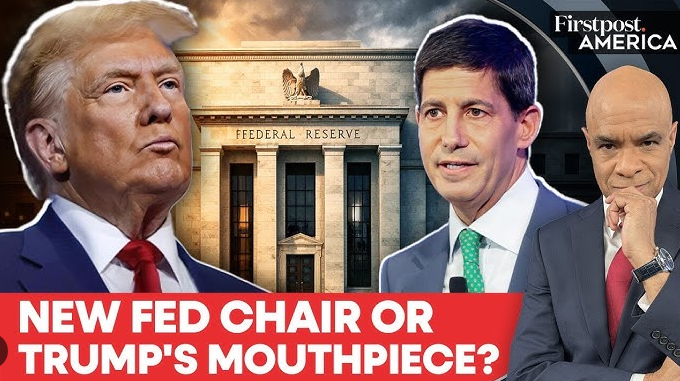

Transcript: The New Fed Chair's Plan to Cancel $37T in Debt
Jesus probably wouldn't approve of profit-based inflation, but would likely understand supply chain-based inflation.
In other words, in the 1970's America suffered supply-chain inflation, raising the price of goods and services to compensate for supply chain issues.
In 2026 America suffers institutionalized, unregulated corporate CEO and shareholder greed: profit-based inflation.
The devaluation of the dollar is relatively miniscule compared to the devaluation of the actual cost-of-living caused by corporate profit-driven inflation.
Based on recent economic data, profit-driven inflation has had a significantly larger impact on the rising cost of living in the U.S. than the devaluation (depreciation) of the dollar on foreign exchange markets.
Economic Policy Institute: https://www.epi.org/blog/profits-and-price-inflation-are-indeed-linked
While a weaker dollar increases the cost of imports, domestic price hikes driven by corporate profit margins played a dominant role in the inflation surge from 2020 through 2024.
Dollar Devaluation vs. Profit-Driven Inflation
Dollar Depreciation (External): This refers to the dollar losing value against other currencies. While a lower dollar does increase import prices, the U.S. dollar has remained relatively strong in trade-weighted terms during the 2020s, with periods of high volatility.
Profit-Driven Inflation (Internal): Also known as "greedflation," this occurred when firms raised prices far above their rising input costs to expand profit margins. Rising corporate profits accounted for over 40% of the increase in prices between 2019 and 2022, and still accounted for roughly one-third of price growth as of mid-2024, far higher than the historical average of 11.5%.
The point is whatever devaluation of the dollar that exists when Congress pays off the national debt, stops borrowing from the Federal Reserve and funds our government moving forward, is small compared to the amount of $39 trillion in debt plus interest payments We The People have been paying and suffering under.
Once We The People pay off the national debt and finally end this vicious cycle of borrowing and owing a huge national debt and interest payments, We The People can use the full faith and credit of the United States Government to the benefit of all Americans; especially the poor and middle class.
The bottom line is We The People should be in the drivers seat instead of CEOS, billionaires, foreign lobby groups and investors.
info@situationpolitics.com
© 2026. SituationPolitics.Com - All rights reserved