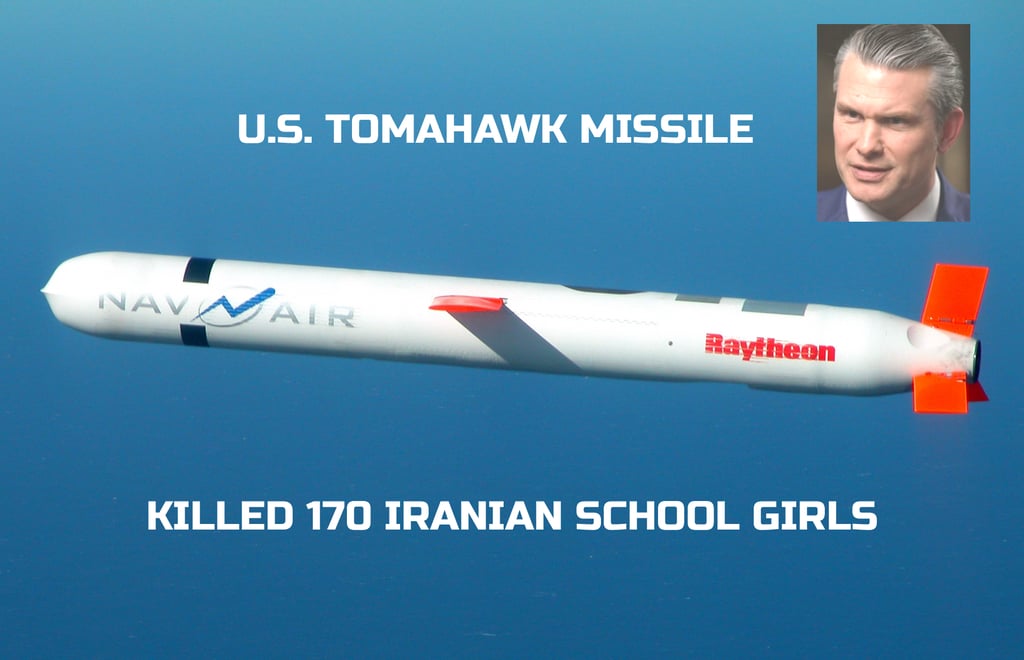
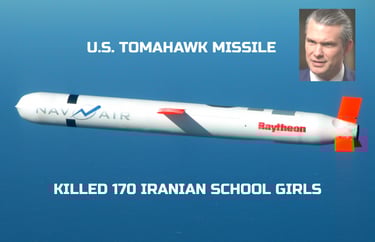
U.S. Air Strike Killed 170 School Girls - Major War Crime
Trump claimed the Iranians did it. Hegseth did it.
SituationPolitics.Com
3/10/202620 min read
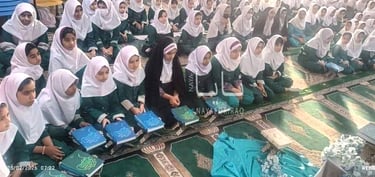
Undeclared wars are commonplace.
Tragically, our government engages in preemptive war, otherwise known as aggression, with no complaints from the American people.
Sadly, we have become accustomed to living with the illegitimate use of force by government.
To develop a truly free society, the issue of initiating force must be understood and rejected.
Scott Ritter, welcome here, my dear friend. So how is this war going for the United States?
SCOTT RITTER:
It's a strategic defeat. I mean, it's an embarrassing strategic defeat.
Uh, you know, we have not achieved our stated objective of regime change, nor will we achieve that stated objective.
If anything, we've made the regime even more resilient.
Um, the president clearly hasn't picked up on that.
His comments about wanting to assassinate the, the new supreme leader, um,
only reflect the stupidity and arrogance and hubris of this man.
Uh, but the, the, the, the Islamic Republic is about a constitutional republic.
Um, means they have systems in place.
They have, uh, you know, checks and balances, uh, resilience, um, and,
uh, you know, killing one person doesn't solve anything.
Um, and because we can't change this regime, um, we have lost the war.
This war was about regime change.
Um, and now we're going to lose everything.
Uh, the bottom line is the, the Iranians have not run out of missiles.
They're getting ready to move to the next phase of operations pre-planned on their part.
Pete Hegseth, the horrific secretary of war who brought this war to the American people and to this president, has changed his war plan at least five times in the last 10 days. It's going to change again.
You know, this is a strategic defeat.
We are a war criminal state. We have carried out an illegal war of aggression.
We have carried out perfidy. We have assassinated leaders, and we have murdered school children.
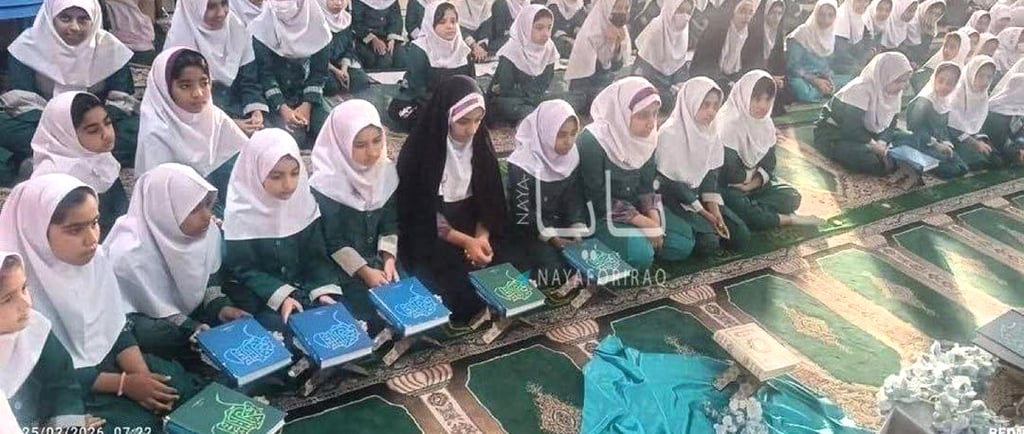
And this was all based upon the horrific advice provided to this president by Pete Hegseth, a man who removed the rules that prevented America from slipping down the path of unconstrained war crimes and created the situation where we slaughtered 170 school children because we forgot that there's this thing called "The Law of War."
Mr. President, did the United States bomb a girl's elementary school in southern Iran on the first day of the war and kill 175 people?
TRUMP: No, I didn't.
Based on what I've seen, that was done by Iran.
REPORTER: Is that true, Mr. Hegseth? It was Iran who did that?
HEGSETH: We're certainly investigating. Still investigating.
But the only side that targets civilians is Iran. We think it was done we think it was done by Iran.
REPORTER: Can you give us an idea of what?
HEGSETH: Because they're very inaccurate, as you know, with their munitions.
They have no accuracy whatsoever. It was done by Iran.
SCOTT RITTER: If you take the video and slow it down, you'll see it's a Tomahawk.
How could it possibly have been done by Iran? Who could have given him that information?
And what could he have based it? Well, first of all, he knows.
The Tomahawk that you see is the second strike, the double tap.
This came after four Tomahawks struck this facility.
We hit four targets there, the initial strike: two warehouses in the, uh,
in the left hand or the, the, the you know, I, I don't know the orientation.
But if you look at a photograph, the left-hand side, two,
two warehouses that were empty because there's no smoke, no secondary explosions.
We struck a main hospital building hospital.
I'll get to that in a second. Uh, smoke came out of that, so the, uh,
targeteers assumed that we had achieved the, uh, desired effects there.
And then we struck another facility about the same size as the warehouses in the upperright-hand corner.
This happened to be the school,
the secondary school for girls aged 6 to 12.
Uh, we struck that facility, but there was a fifth cruise missile.
Uh, these are Tomahawk Block 4s.
Uh, the fifth cruise missile, uh, was the contingency cruise missile.
This is the one that circled over the site, sending imagery back to the, uh,
destroyer that launched these cruise missiles, uh,
so the people could evaluate whether or not the desired,
uh, effects had been achieved and, if not, to restrike.
They made a decision that the two warehouses were sufficiently struck because you had
holes in the roof, no secondary empty facilities.
The hospital, which they didn't believe was a hospital when it was a hospital, had been struck,
smoke coming out, meaning you achieved the results.
This is a warhead that has dual, uh, capability.
It penetrates and then blows up inside.
So if you got a hole in the roof and you got smoke coming out, it means that you,
you achieved significant damage inside.
Then you have the third facility that had been struck, um, partial collapse,
but here they saw people running around.
Here they saw, uh, people, uh, moving in, assembling, uh, people coming in off the streets.
And a decision was made that this must be a very important site,
so they sent the cruise missile in to strike it.
But not just that it didn't just hit with a with the dual-phase warhead.
Uh, the, the Block 4 has the capacity to take unexpended fuel
and use it as a fuel-air explosive to create a thermobaric effect.
And so this missile went into the building, didn't just explode conventionally,
but went in with a thermobaric effect, a deliberate choice made by the targeteers.
Now, what had happened, though, is that first missile that hit hit the school, and,
um, the majority of the students survived.
There were some that were killed in the initial strike, but the teachers took the survivors
and moved them into the prayer hall, which is a part of the facility that remained intact.
They called up the parents, most of whom live locally,
and the parents began to arrive to pick up their children.
Um, they were majority were concentrated in this prayer hall when the decision was made
to restrike. This cruise missile came down, penetrated, blew up,
and then the thermobaric explosion hit.
Listen to how the parents described the condition of their children's bodies:
burned to a crisp. There was nothing left.
This was a deliberate action by American, uh, planners.
We know how many cruise missiles were striked. Each cruise missile had a target put into it.
We know that there was a restrike. We know this without any doubt.
The president of the United States is either a liar or has been told bad information,
and Hegseth knows the truth.
Pete Hegseth is a war criminal. This war cannot end with Hegseth still in charge.
He must be removed from power and preferably arrested and let me tell you why.
See, the, the, the,
the United States, um,
even though we're not a signatory to the additional protocol of the 1949
Geneva Conventions, the additional protocol of 1977, we adopted them as part of our, um,
uh, manual for the law of war, the law of war manual, Department of Defense.
And it requires us to use, uh, discretion when, uh, when, when, when striking.
We have to determine that there is no civilian target.
This is a requirement under the rule of law. I've done targeting and combat.
I can tell you we do this.
We don't allow artificial intelligence to pick these targets, assign grids to them,
and just strike them out on a whim.
But that's what we did because we eliminated the, um,
the requirement to adhere to the law of war. Pete Hegseth did this.
In 2023, Joe Biden's, uh, Department of Defense put forward a, a,
a directive called the, um,
Civilian Harm Mitigation and Response Directive.
This required the Department of Defense at every level to have a team who looked over
every target to determine whether or not this target was
a military target or a civilian target.
We knew that this facility in 2016 cut off that site.
We knew in 2016 that that became an elementary school. We knew this because it was public information.
But artificial intelligence doesn't pick up on that.
Artificial intelligence was simply told within this
compound to find buildings of a sufficient size that could be used to hide, uh,
cruise missiles or drones or anything like that.
So we're doing a preemptive strike to carry out to take out facilities believed to be
capable of. So we hit two empty warehouses. We hit a hospital, and we hit a school.
Welcome to the targeting.
This would have not happened had Pete Hegseth not canceled this directive.
Had this directive been in place, we would have a team of targeteers specially trained, uh,
to go through the intelligence and ensure that we don't strike anything that remotely
resembles a civilian target. And this was a known knowable.
We have the information, uh,
that it was a school. It's just that artificial intelligence bypassed that.
But we took out the human element. We struck it. We murdered these kids.
Pete Hegseth murdered these kids. Pete Hegseth is a war criminal.
This war cannot end with Pete Hegseth still in charge.
He must be removed and held accountable.
If this president wants, he can blame it all on Pete, said he was lied to by Pete, whatever.
But somebody's head has to roll. We murdered 170 children. It wasn't an accident.
It was a deliberate act of war, carried out by the United States, uh,
in violation of our own laws and violation of international law.
Why did, uh, Hegseth permit this to happen?
Because he wants to be lethal.
Pete Hegseth is the idiot who lectured 800 generals and admirals last October in Quantico
about the need to forgo wokism,
to forgo the rules.
We cannot be constrained by these rules of engagement. We have to be lethal.
We have to kill, kill, kill. That's what this testosterone-infused madman wanted.
So he got rid of the rules so that we could go out there and kill, kill, kill.
Well, we did. We murdered 170-plus, uh, school children.
There has to be a price paid by this.
It can't the United States cannot be allowed to perpetrate this crime and walk away free.
This well, the whole war, in my view, and I, I, I think you agree,
is a war crime because it's a war of aggression.
This is this is the this is the war crime that is the
progenitor of all other war crimes. Yep.
This is what leads to what Hegseth did. This is what leads to the killing of civilians.
This is what leads to torture.
I'm, I'm sort of paraphrasing Justice Jackson's closing argument
in the Nuremberg in the Nuremberg trial.
There's no question about that these are war crimes.
Donald Trump, under, uh, this analysis, is a war criminal as well because there's no
lawful or moral basis, uh,
for the war. According to the, uh, Iranian foreign minister and this was yesterday,
uh, Scott,
the US has for the second time
asked for a ceasefire.
Now, we know they asked
late not even late last week, the middle of last week,
they asked the Italian foreign ministry to ask.
The Italians came back with, as you've characterized, the two responses: no and hell no.
I don't know who they asked this time,
but let me play for you
what the foreign minister, whom you and I have met, uh, said. Chris, cut number 13.
Obviously, this time is different from the previous time.
Last time, we accepted the ceasefire.
Uh, but, you know, this time is quite different. Uh, and the reason is obvious.
You know, last time, they attacked us. They made aggression against us. They killed our people.
They destroyed our places and then asked for a ceasefire.
And we accepted out of good faith because we were only
exercising the, the, you know, uh,
the act of self-defense.
And when the aggression was stopped, we stopped too.
But, uh, you know,
it didn't bring about peace.
And now this year, they again started to attack us.
And again, they have you know, they are killing our people.
They are killing, you know, girls, students.
You know, they are attacking hospitals,
you know, freshwater desalinations,
you know, refineries,
you know, everywhere. People have been killed.
Places have been destroyed.
And now, they want to ask for a ceasefire again?
Well, this doesn't work like this.
So there should be a permanent end of the war.
And unless we get to that, I think we need to, you know,
continue fighting for the sake of our people and our security.
Now, they want to ask for a ceasefire again.
Why would Trump's people indirectly have sought two ceasefires in these 10 days?
Because we lost the war, and they know it.
This war can't be won.
Um, they sought the ceasefire early on to prevent, um, what's happening now, which is,
you know,
a global energy security crisis and, uh, you know, uh,
the destabilization of the global economy because of high energy prices.
Um, now that this happened, they need to reverse this. They need to end this.
So they're asking for a ceasefire.
The Iranians are 100% correct because a ceasefire today simply resets the map.
Iran has, um, suffered so much,
sacrificed so much to achieve the position they're at today where they have strategic
superiority over both the United States and Israel in this conflict.
Um, Israel is defenseless. Iran's getting ready to turn up the heat.
Uh, the Gulf Arab States are defenseless.
In the United States, there's nothing the United States can do to stop Iran.
Um, and what could happen next is if we continue to strike for instance,
if Israel continues to strike strategic energy-related targets inside Iran,
Iran will destroy the
totality of the energy production capacity of the
Middle East. Um, and that's a game-set match.
That's there it can't be replaced.
Um, you know, the people that will win in the long run will be Russia,
which is sitting in the Catbird seatright now, um,
China because China will have a strategic relationship with Russia,
and Russia will provide them with the energy.
Uh, India is going to be a disastrous loser, our disastrous loser.
You only have to look at the lines of, uh,
Indians trying to fill up their canisters with gas. Uh, India picked the wrong side.
They chose Israel over Iran, a fellow BRICS member. So India's going to pay a horrible price.
Europe is going to collapse.
And the United States is going to suffer the consequences as well because even though
we're energy independent in theory, we're not.
Uh, our, our you know, the oil market is part of a global market.
The petro dollar is part of a global market. We can't isolate ourselves from the world.
We are linked to the world.
So when prices spike globally, they spike at home unless the president can do something
to offset it. But in order to do that,
you need a strategic petroleum reserve that's been fully stocked.
Ours hasn't because the president hasn't done his job.
So you're going to see
increasing moves by the president to bring an end to this conflict.
He may try to declare victory down the road. He what I guess what he's going to try to do,
if I'm a guessing man, is he's going to try and kill the new supreme leader.
And once he murders that supreme leader, he will declare victory and walk away,
not understanding that the Iranians will never let him walk away.
Does the, uh, 5th Fleet have a port in Bahrain to which to return? No.
They don't have anything in the
we don't have anything.
I mean, we have bases where we could theoretically put troops in.
There's you know, we might have some barracks that are intact.
But the functionality of these bases, uh, is no longer relevant.
Al Udaid can no longer be seen as a hub of American air power in the region because it's
going to it will be forever vulnerable to, um, an Iranian attack.
The Iranians will not allow the accumulation of American air power in any of these, uh,
in these facilities. So Al Udaid is permanently vacated. Uh, it's lost its radars.
It's lost its communications. And, uh, the United States will not be allowed to return. Uh,
the same thing holds true for all the other bases in the region.
Um, and this is what Donald Trump will have to accept.
If he wants a ceasefire, if he wants an end to this conflict, he has to permanently, um,
remove American power from the region. And he has to lift economic sanctions.
Iran won't allow the
opening of the Strait of Hormuz unless the United States lifts sanctions against, uh,
against Iran. There may be some negotiating room for Iran's nuclear program.
I hope there is, uh, because otherwise, we could be seeing, uh,
a dangerous move towards Iran trying to acquire a nuclear weapons capability in the face of,
you know, uh, threats from Israel and the United States.
Um, we do need to negotiate into this war,
but Iran is not going to be the one making concessions. Uh, they didn't start this war. Uh,
the United States and Israel started this war.
And it's going to be up to the United States and Israel to, uh, pay a price.
I mean, Israel, I believe, if Iran is going to put its nuclear program on the table,
it has earned theright to demand that Israel puts its nuclear program on the table as well.
And Israel may not be in a position to oppose this because, uh,
Israel's about to be turned upside down.
Iran has changed its targeting parameters now that they have, uh,
eliminated Israel's ability to defend itself. And Israel has no ability to defend itself.
That was proven last night when Iran struck the home of Benjamin Netanyahu,
the home of Ben-Gvir,
and struck other critical facilities,
including the power station that, uh, brings power to Tel Aviv, which was taken offline.
Iran sent a signal last night that it can hit Israel anywhere it wants to,
and there's nothing Israel can do.
Now, Iran's about to escalate by saying all missiles that hit Israel from in the future
are heavy missiles only with a minimum one-ton warhead.
Tel Aviv's about to be turned upside down.
Now, if Israel wants to prevent this from happening, then Israel has to agree to
conflict resolution terms that
ensure that Israel never again threatens Iran.
And, uh, one of the ways that that could be done is get rid of their nuclear program. Is,
um,
Iran in danger of the
Israelis detonating nuclear weapons over Tehran?
I don't think Israel will detonate a weapon over Tehran.
Um, that would be a precipitous move that would, uh,
guarantee the physical destruction of Israel from a number of fronts.
Um, Israel may choose to do a nuclear demonstration in the, uh, deserts of, uh, of Iran,
uh, and say the next one that goes off will be, you know,
over Tehran or something of that nature if Iran doesn't agree to bring this war to an end.
But Iran reminded, uh,
Wyckoff and Kushner, uh,
the terrible duo, uh, that they have 450 kilograms of, uh, 60% enriched uranium hexafluoride. Um,
they also have the ability to continue to enrich that.
Uh, they have probably up to four or five 164, uh, centrifuge cascades, uh,
sequestered around the country.
Um, they've probably broken up the 450 kilograms into several chunks, 60-kilogram chunks, um,
that can be enriched in, in, you know, in different locations.
Um, Iran will build a nuclear bomb. We don't know what's happened now.
The one thing that stopped Iran from building a nuclear bomb was Ali Khamenei and his fatwa.
We murdered him.
Now, he's been replaced by his son, who's more conservative, uh,
and has now to deal with the consequences of his father being murdered,
his daughter being murdered, his wife being murdered, his family being murdered.
And you think he's going to sit there and say, "Hey, let's make peace." No.
Um, he may continue the legacy of his father by, uh,
prohibiting the manufacture of a nuclear weapon.
But, um, he is under a tremendous amount of pressure, uh,
to make sure that Iran retains,
uh,
the ability to counter any Israeli nuclear or American nuclear threat.
Uh, Iran will be able to produce nuclear weapons that are deliverable within a week and
a half of the decision being made.
Um, so if Israel uses a nuclear weapon against Iran,
it's a guarantee that Iran will strike Israel with, uh, three to five nuclear weapons.
That'll be the physical destruction of Israel. And it will never recover from that.
Israel will be wiped off the face of the earth.
Iran may suffer huge consequences as a result.
But, um, Israel needs to understand that, uh,
the day of Israeli dominance, um, unquestioned Israeli dominance is over.
Iran's ballistic missile program, as, uh, you heard, remember what the Iranian president said?
He said, "We believe our ballistic missile program provides sufficient deterrence.
We don't need a nuclear weapon." Right. Well, that's been proven to be the case.
Have, um,
the United States and
Israel run out of, uh, interceptor/defensive missiles,
or are they running dangerously low?
We're running out of PAC-3s, which are the, uh, more, uh,
capable of the, uh, Patriot missiles. Uh, the fact is, last night, I believe, uh,
all they fired was PAC-2s,
which was why they didn't hit anything because we don't have anything left.
Um, there may be a small stockpile of PAC-3s.
We might be able to do some short-term reinforcement of PAC-3s, but we're out of them.
And THAAD, we just don't have any radars left.
I mean, uh, we might be tapping into the Turkish radar and, uh, outside of Diyarbakir, uh,
which is a NATO radar, uh, to guide THAADs.
But, you know, all of the THAAD radars in the Middle East and Jordan, um, uh,
maybe even in Israel, have been struck by the Iranians,
which basically makes the THAAD an ineffective weapon system.
Um, our ships off the shore of Israel have, you know, SM-3, SM-3 Block 2s, and SM-6.
These are different interceptor missiles with different capabilities.
Um, but it's a finite stockpile.
When they run out and they've already blown through them, um, there's nothing to replace them.
So Israel is, in effect, naked. They have no defense. That was proven last night.
The Iranians can strike anywhere, anytime they want to.
And now, they're getting ready to ratchet it up.
The next strikes you see will probably be with
one to two-ton warheads. And this is a game-changer.
These are going to be warheads that will take down
the skyline of Tel Aviv. We're literally going to look at Tel Aviv be reduced to
Gaza-like rubble if Israel wants to continue this war.
There's no indication in the West of the severity of the
damage that the Iranians have caused in Israel.
From your mouth, it's the first time I heard that Netanyahu's house was hit,
Ben-Gvir's house was hit, and the Israeli,
uh, electric grid, uh, was hit.
I gather the Israelis are imposing censorship so that the world
doesn't know how naked they are. Yes.
That's, uh, 100%, um,
true statement.
Uh, but they can't, um, I mean, they're not allowing the visual thing.
But you have, um, you know,
we have video of Israel being struck and the lights going out in Tel Aviv.
Uh, we have numerous, uh, uh,
people who post on, uh, you know, from Tel Aviv saying, "We don't have any electricity." Uh,
the Israelis have acknowledged that Netanyahu's brother was killed in the strike against
Netanyahu's house.
And there's videotape of Netanyahu's residence on fire. And Ben-Gvir has been severely injured.
Uh, people believe he might be dead or he might not survive this.
Israel has tried to cover this up by saying he was in a car accident,
but his house is on fire. So, you know, this isn't speculation. This is known fact.
Um, and, uh, the Israelis, you can't cover it up. I mean, it's a small place.
Um, when, uh, when the prime minister's home gets hit and is on fire, um,
that ends up on the internet. And it has. It ended up on the evening news in, in, uh, in,
in, in Tel Aviv. And, uh, it ended up on the on the internet here.
How does all this look from Moscow?
Again, as you know, um, the Russians want stability.
The Russians don't thrive in instability.
Um, I've been I've heard from
ambassador after ambassador after ambassador
that Russia, once more than anything, is predictability.
That, uh, the only way you can make a, uh, viable foreign policy is to have predictability,
to be able to say, "This is what the future looks like.
This is how we plan accordingly." You know, that doesn't mean that you get what you want.
To know that you're not going to get what you want allows you to prepare for that.
Uh, this situationright now, you know,
Vladimir Putin has come out and issued a statement that basically said,
"We're in a unique situationright now that we need to take full advantage of." Uh,
meaning it's time now for
the Russian oil companies to demonstrate to the world that they are the epitome of stability,
that they're not like all these other oil companies out there that could be blocked and
sanctioned and all the I mean, not sanctioned,
but blocked and interfered with.
That Russia is the one stable source of energy in the world.
Um, and they will be able to make this point.
So the day of sanctioning Lukoil and Rosneft is over.
The world just simply isn't going to buy into that nonsense because Lukoil and Rosneft
provide energy. He's also told the energy companies to take advantage of this, uh,
make as much money as you canright now and pay off your damn debts,
balance your budgets, and get back to normal here.
Um, and the same thing will hold true for
Russia's economy. The, uh, the idea that, you know, I mean,
Russia's going to be able to generate a lot of money.
They'll be able to balance their budget, which they're having trouble doing.
Uh, but this is short-term.
Uh, long-term, Russia needs stability.
Russia's long-term interest with Iran isn't to have short-term price hikes that, uh,
give Russia, you know, an economic, um, windfall, but to create the stability for long-term, uh,
you know, economic stability through the North-South Economic Corridor, linking St.
Petersburg with, uh, Chabahar and Bandar Abbas.
This is what the Russians want.
The Russians want China to have the, uh,
New Silk Road connectivity from Western China to Tehran by a rail.
Um, this is what Russia's looking for.
Russia's looking for Iran to be a member of the Eurasian Economic Union.
They're looking for long-term stability, um,
investment opportunities.
And how is this being viewed
from Beijing?
Remember, the Russians are the ones that set the standard here.
How do they end the war with Ukraine? They want an end,
but only if you address the root causes of the conflict.
Russia will not allow conflict termination that only allows Ukraine and NATO to reset
and do this again in five years.
Russia is not pursuing conflict terminationright now, uh, with Iran.
It's Israel to reset and do this again in five years.
This war ends when this war ends, which means the United States will have to leave the
Middle East and Israel will have to stop its greater Israeli ambitions and perhaps
give up its nuclear weapons program.
And how does, uh, Beijing, uh, view this?
The same way. I mean, the Chineseright now, first of all,
the Chinese have been dealt a very big gift, um,
because they're, you know, when you talk about a potential conflict with Taiwan,
Taiwan's just got to be, you know, pooping a brickright now, excuse my language.
But, um, you know, the United States, "Here, take the Patriot 3. Three.
You're safe.
Here's a THAAD." And the Taiwanese are going, "Nope.
We're not safe.
We don't want to do this because, uh, we're looking at missile expenditure rates and
we couldn't do what we'll shoot all our missiles in one day if the Chinese come after
us." And the Chinese are going, "Wow,
maybe we calculated correct.
Um, we just fire a huge salvo of missiles at Taiwan.
They run out of interceptors and then we pick them apart and we win this war overnight
and there's not a damn thing the United States can do." Um,
so China's been handed a big giftright now.
Um, you know, the national security strategy of the United States published last November
talked about, uh, it was a precondition of our approach to China
to have conventional military overmatch,
meaning that we want in there and we flex our muscle and the Chinese go, "Oh,
we don't want to have anything to do with you.
That's over." The Chinese are going, "Dude,
go to the gym. Hey, Pete, 3:15. Nice. Our dude lifts 5:50.
So, um, you're done." Um,
this is a big gift to the Chinese.
I think what you'll see in, uh, April when Xi Jinping meets with, um, with,
uh, Donald Trump, if that meeting still goes through,
is the Chinese will seek to insert themselves as a broker.
Uh, they will confront, uh, Donald Trump with the reality of what he's done and the consequences
of what he's done. And they will offer him an off-ramp.
But Trump is going to have to agree to certain things such as the lifting of sanctions
against Iran and pressure on Israel to stop behaving in a manner incompatible with peace
and security, to include Israel may have to put its nuclear program on the table.
Now, Iran will put its nuclear program on the table as well.
The Chinese will, you know, broker this.
But I think China's roleright now is to, um,
is to position itself to be a,
um, you know, the person that brings peace to the Middle East. They did it once before.
They brokered a rapprochement between Saudi Arabia and Iran.
And I believe China could do it again. They are the big dog when it comes to the economy.
And they have, they, they have skin in this game.
The Chinese economy is dependent upon
continued flow of energy out of the Middle East.
So they want to bring it into this conflict as well.
Scott Ritter, thank you very much.
What a brilliant and gifted, uh, analysis, uh, of all of this.
How I wish those characters that, uh,
whisper into Trump's ear could hear you. Well, we know somebody from the West Wing watches.
If you're watching now, send this clip to the president. Thank you, Scotty. All the best.
Thanks a lot. Sure.
Coming up, uh,
on all of this with his unique analysis at 4 o'clock today,
Professor Jeffrey Sachs.
Judge Nepal Tanner for Judging Freedom.
My post content


info@situationpolitics.com
© 2026. SituationPolitics.Com - All rights reserved